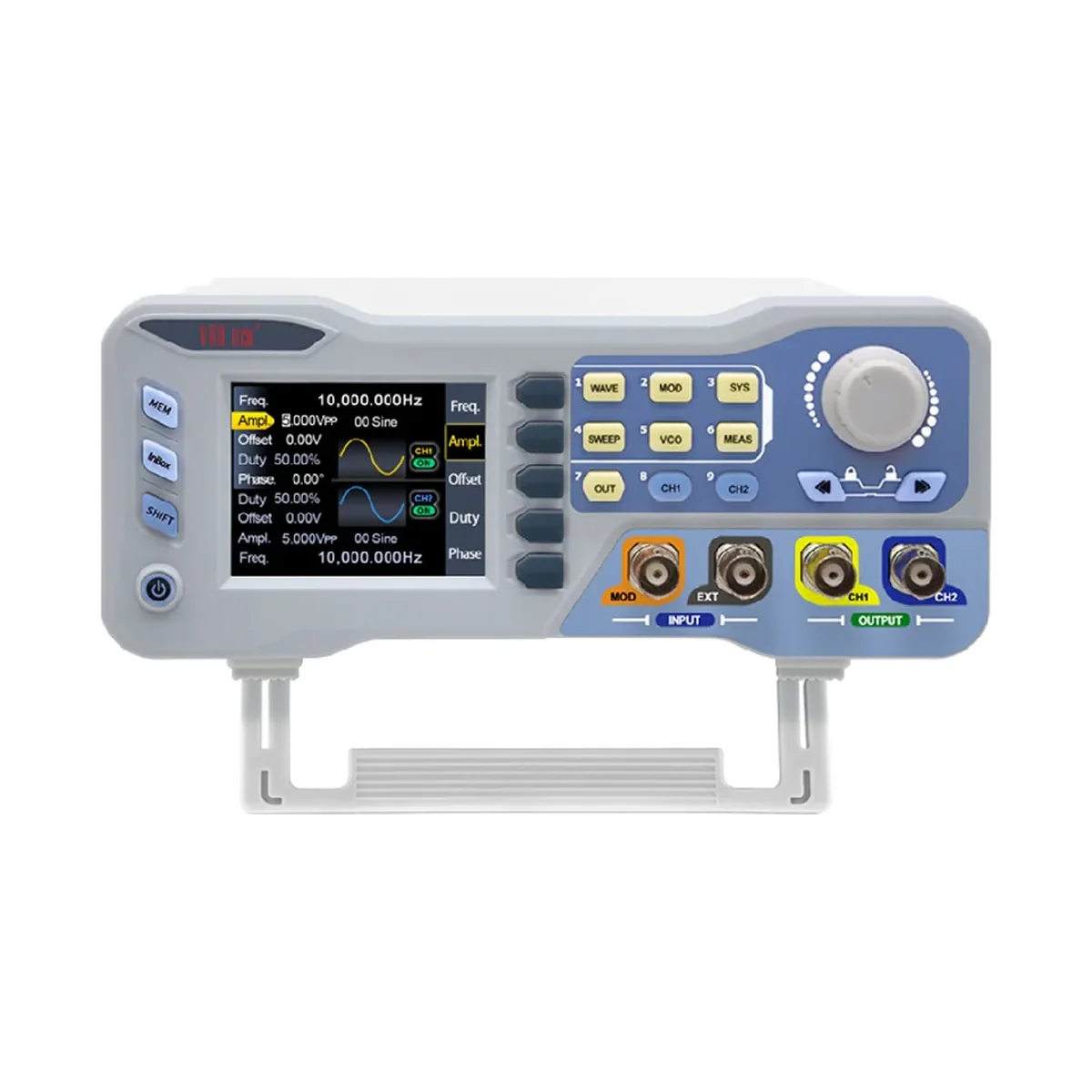
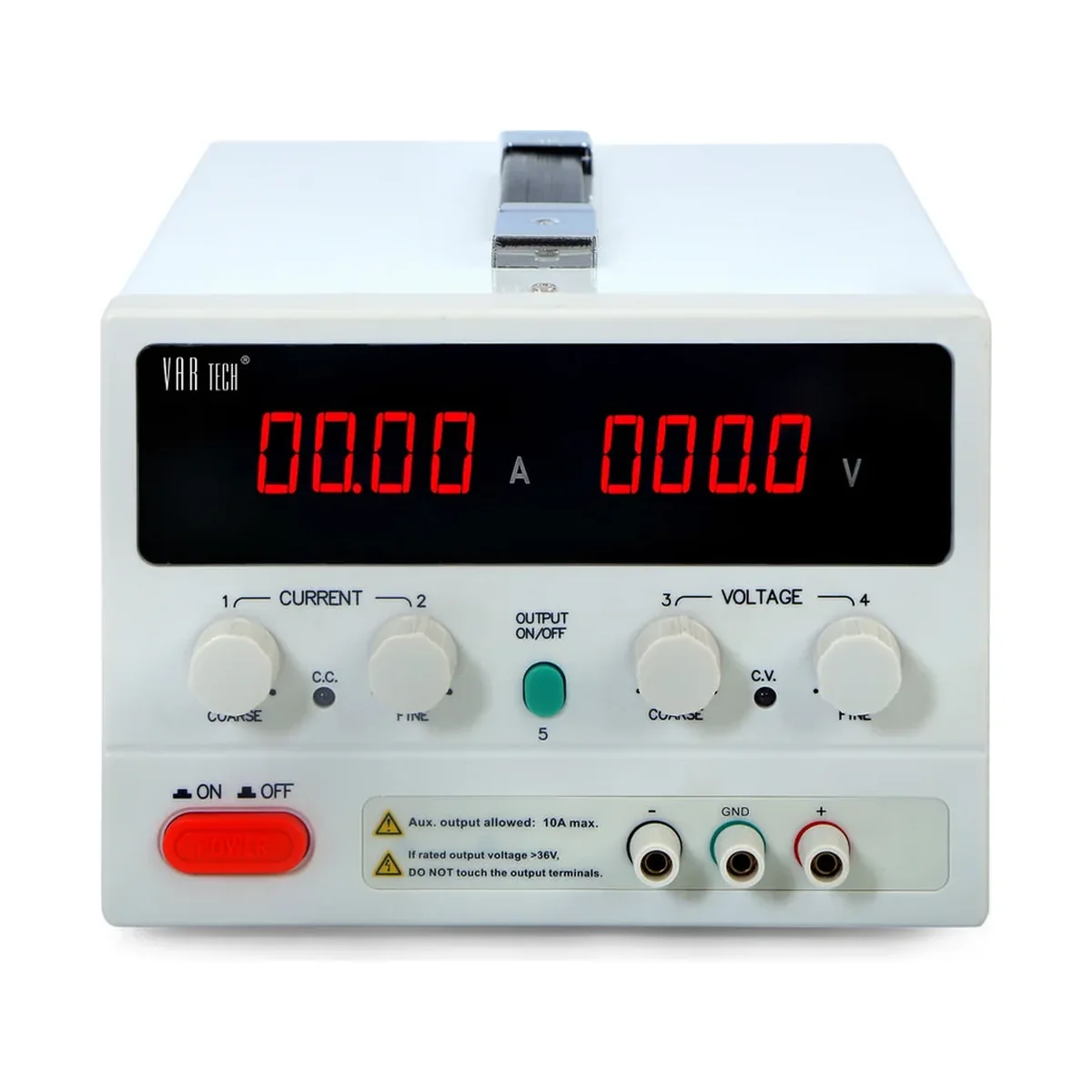
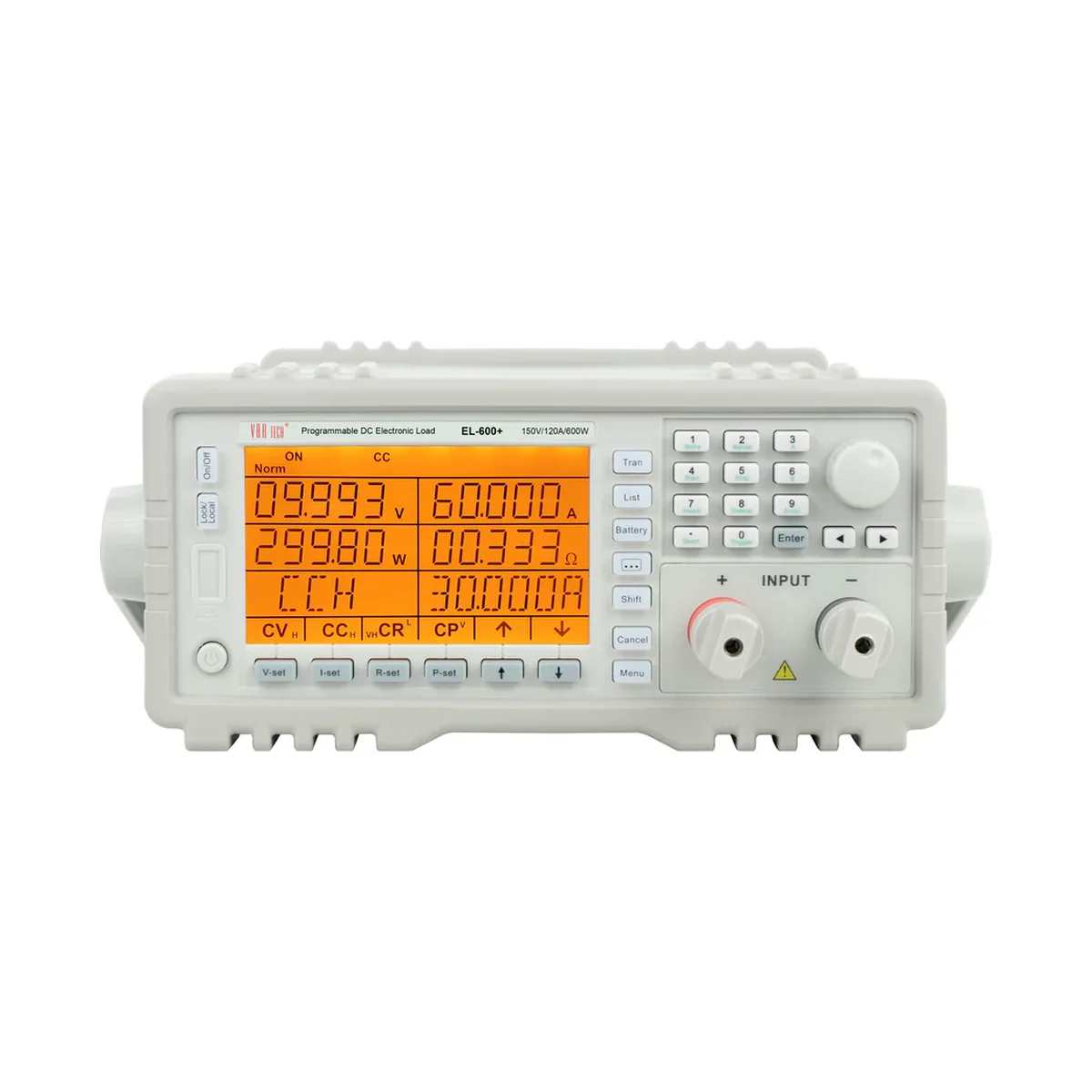
Oscilloscopes
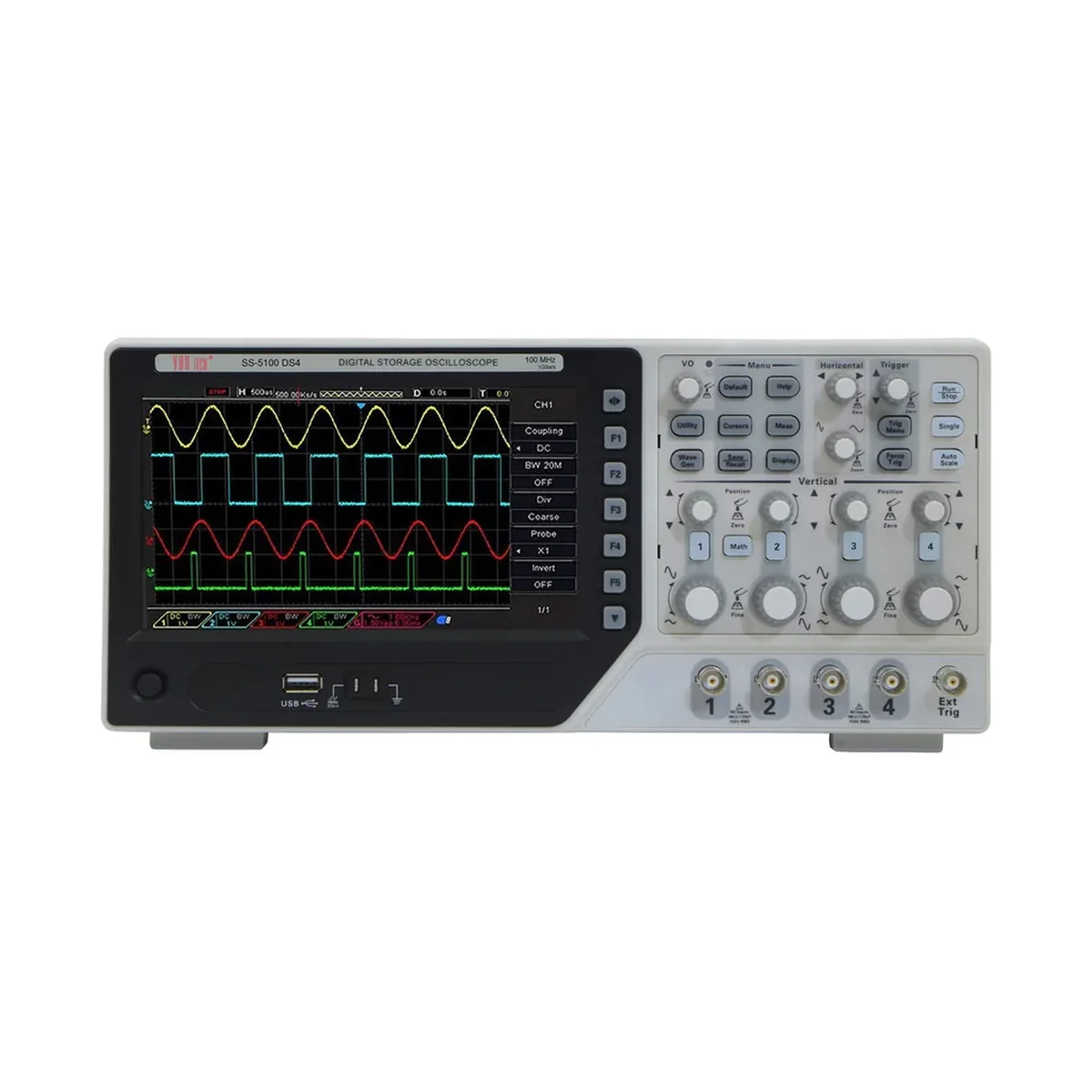
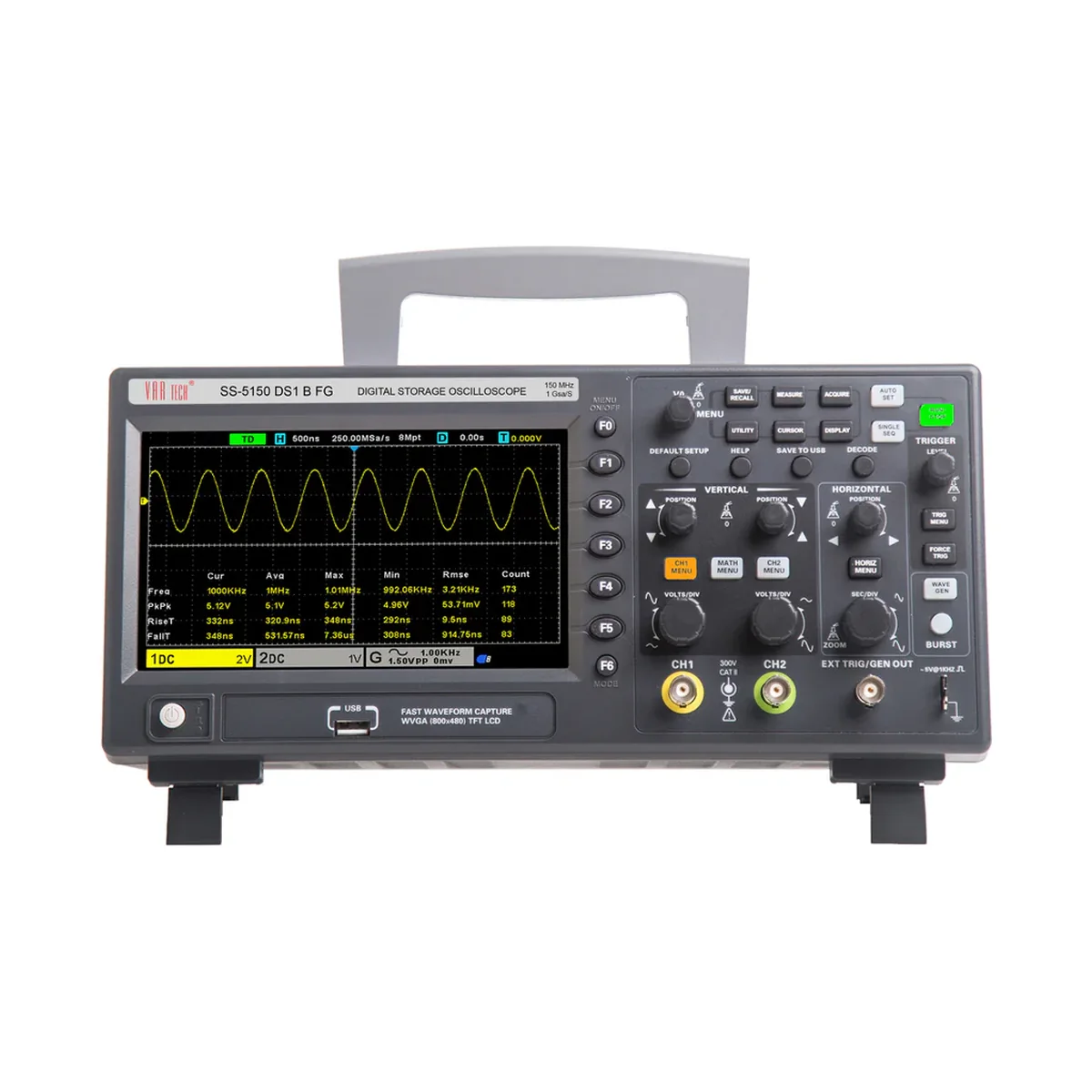
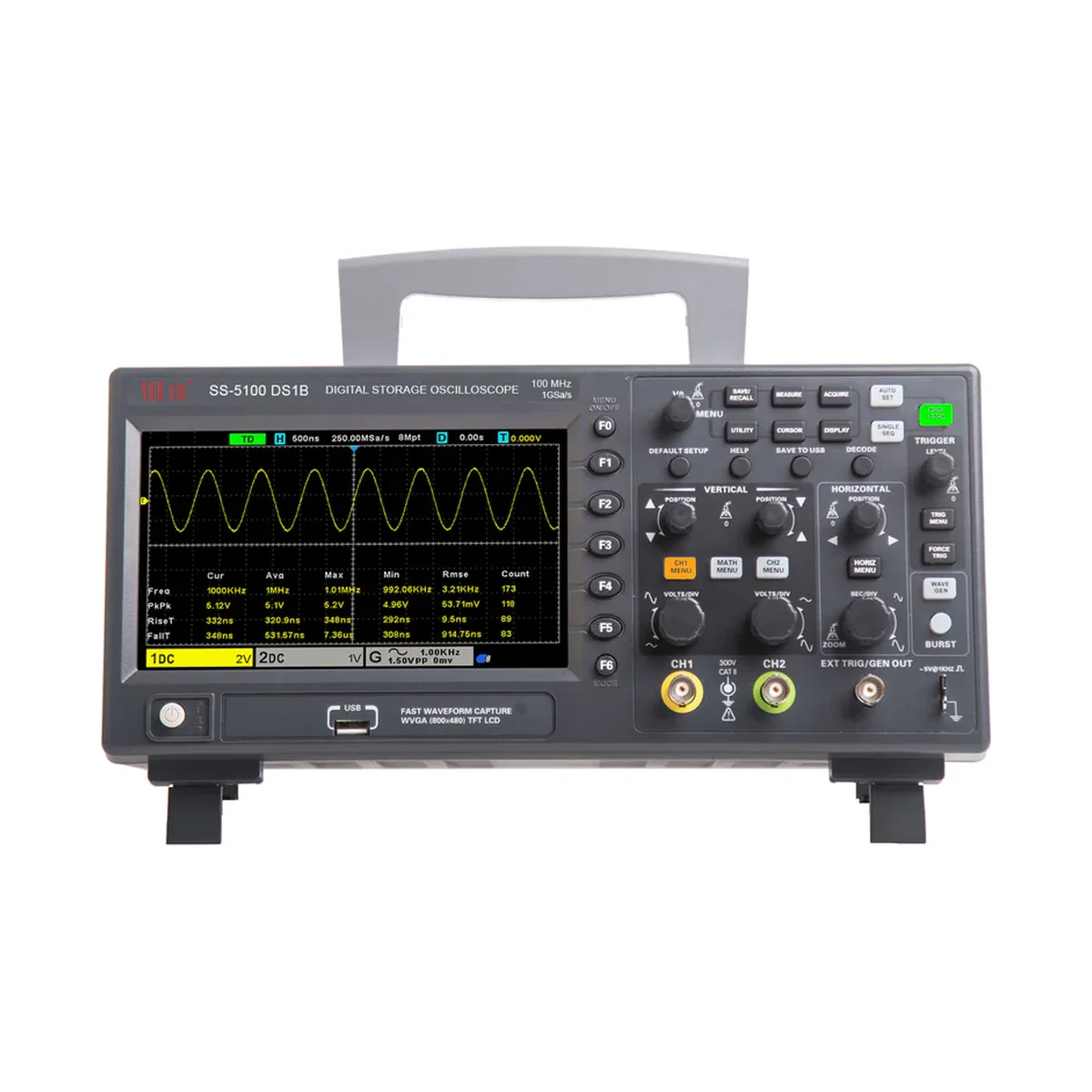
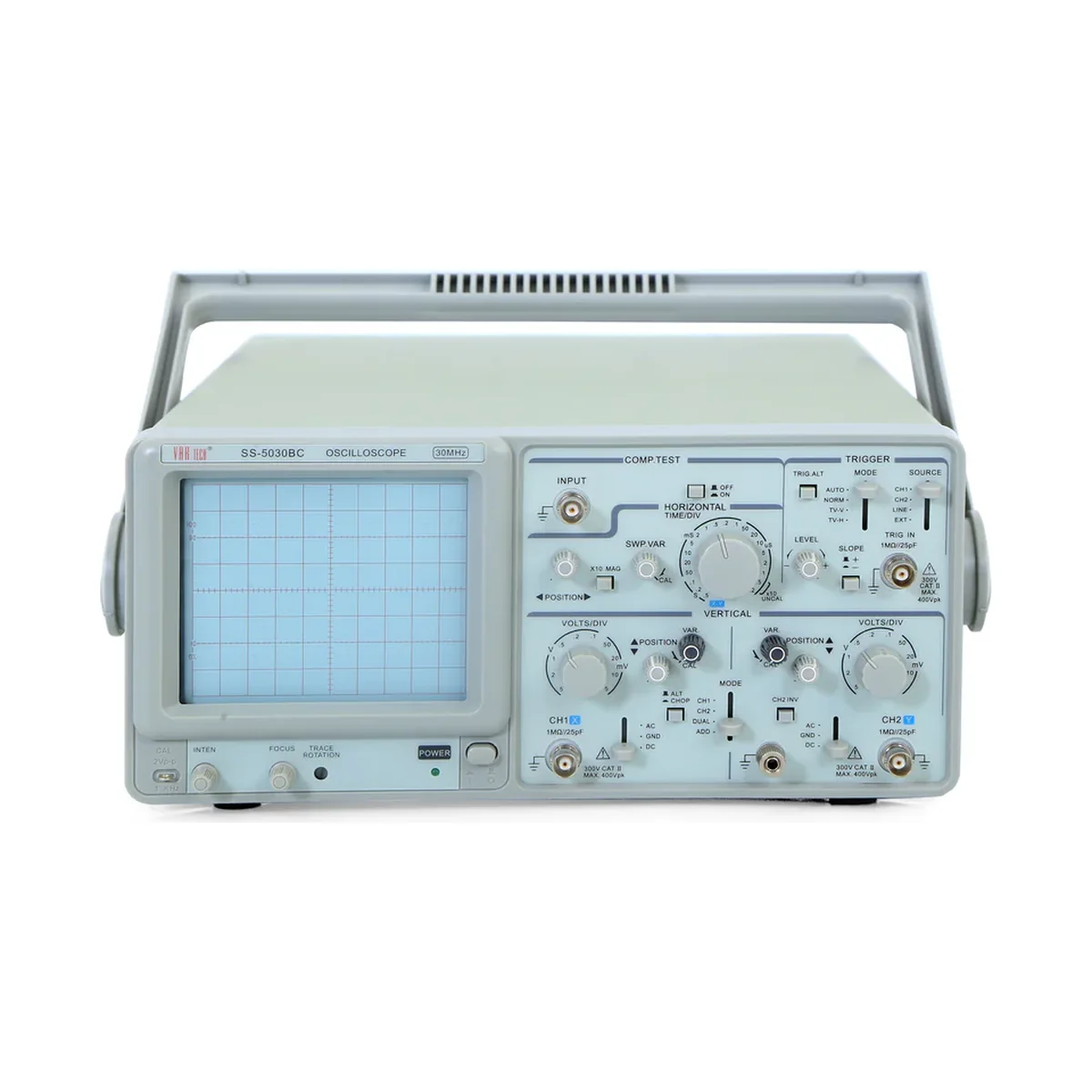
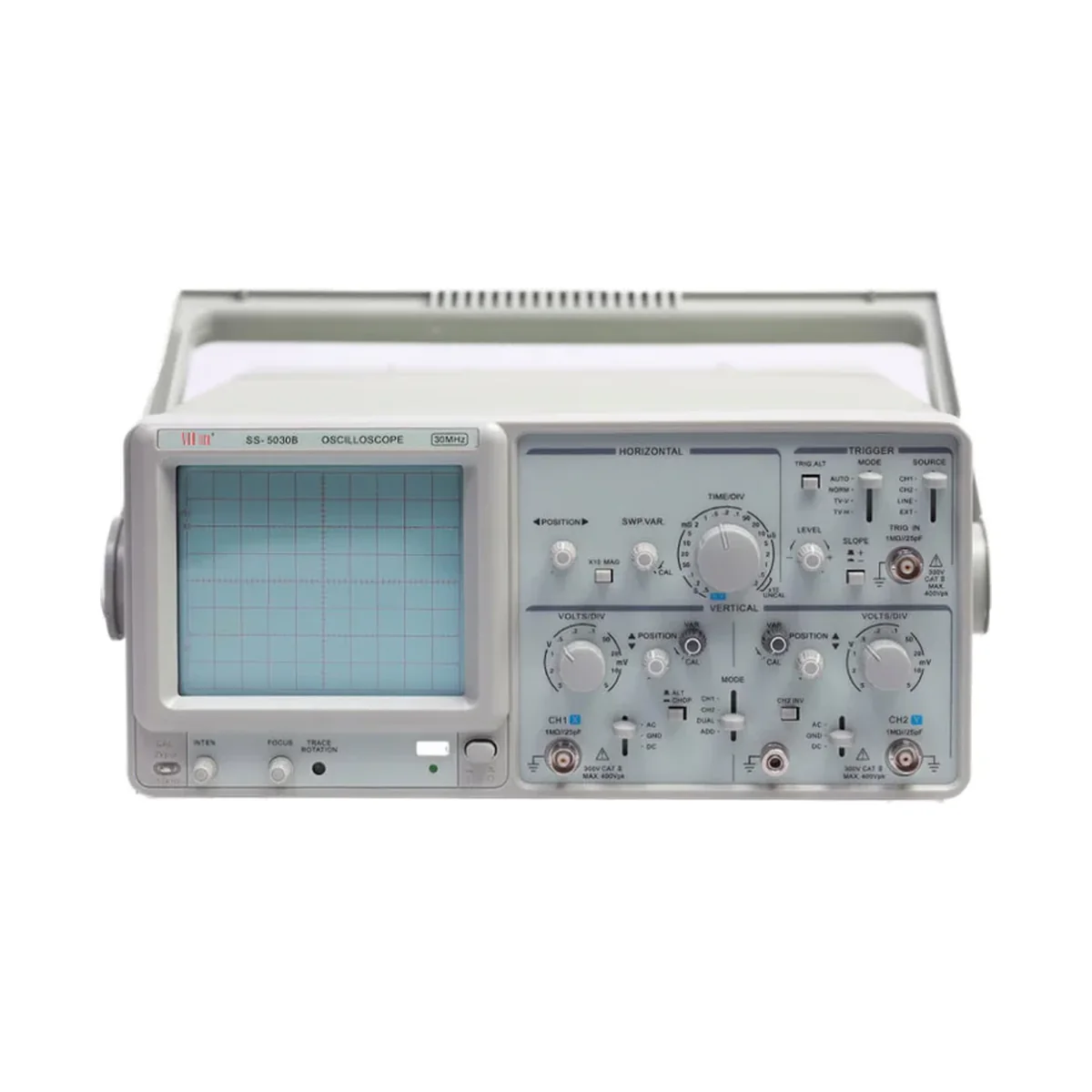
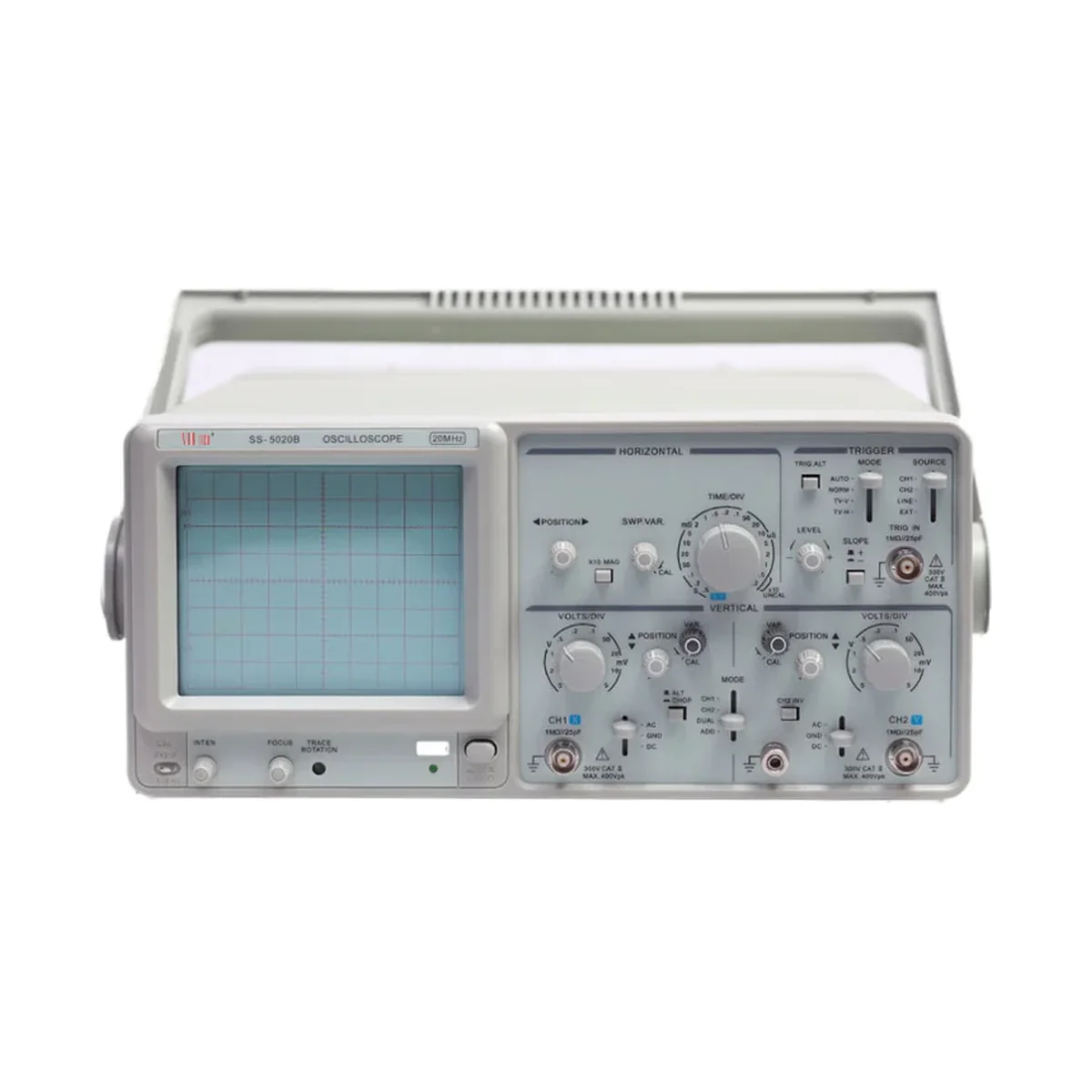
An oscilloscope shows you how a signal changes over time. Digital storage scopes capture and hold waveforms for analysis, while analog scopes show a live trace with no delay.
- Electronics design
- Repair
- Teaching labs
- Power electronics
6 products

Nothing matches that.
Try removing a filter, or . Or call us and we will help you find it.
How to choose.
Want the long version? Read our oscilloscope buying guide: bandwidth, channels and analog versus digital.
Still unsure? Call us and describe the job, and we will point you to the right model.
- 1
Bandwidth
As a rule of thumb, choose a bandwidth at least five times the highest frequency you need to see. A 100 MHz scope suits signals up to roughly 20 MHz.
- 2
Channels
Two channels cover most work. Four channels help when you need to compare several signals at once, such as power electronics or digital buses.
- 3
Digital or analog
Digital storage scopes capture one-off events and offer measurements and storage. Analog scopes are simple, fast and still popular in teaching labs.