The short answer
Testing 415 V motors, panels and wiring: the DIT-5005 does it at 500 V or 1000 V and is the simplest. Need 100 V to 2500 V, PI and DAR and a True-RMS multimeter in the same hand: the DIT-2500. Testing HT motors, cables and transformers above 2.5 kV: the DIT-5000, which goes to 5000 V and 200 GΩ.
What an insulation tester actually does
An insulation tester (often called a megger, after one famous brand) pushes a high DC voltage through the insulation of a motor winding, cable or appliance and measures the tiny leakage current that flows. It then shows that as a resistance, in megohms (MΩ) or gigaohms (GΩ). A healthy insulation system reads very high. As insulation ages, absorbs moisture or gets contaminated, the reading falls, long before the equipment trips or fails. A multimeter cannot do this job: its resistance range uses a few volts, which will never reveal a weakness that only shows up under hundreds or thousands of volts.
That is why electricians test insulation before commissioning, after repairs, after floods or long shutdowns, and on a regular maintenance schedule. A trend of readings over the years is often more valuable than any single number.
Step 1: choose the test voltage
The test voltage should be matched to what you are testing. Too low and a weak spot can hide. Too high and you may stress or damage equipment that was never meant to see that voltage. These are the values most commonly used in practice, in line with IEC 60364-6 for installations and IEEE 43 for rotating machines. Always check the standard or the manufacturer's advice for your equipment.
| What you are testing | Test voltage | Covered by |
|---|---|---|
| Very low voltage circuits (SELV and PELV) | 250 V | DIT-2500 |
| Wiring and equipment up to 500 V, small motors, appliances | 500 V | DIT-5005, DIT-2500, DIT-5000 |
| 415 V motors, panels, busbars, wiring above 500 V | 1000 V | DIT-5005, DIT-2500, DIT-5000 |
| 3.3 kV motors, HT switchgear, cables | 2500 V | DIT-2500, DIT-5000 |
| 6.6 kV and 11 kV motors, HT cables, transformers | 5000 V | DIT-5000 |
The DIT-5005 is supplied as a fixed configuration: choose 500 V or 1000 V, each with a resistance range, when you order.
Step 2: understand the resistance range
Every insulation tester has a maximum resistance it can display. Modern motors and good cable run into the gigaohms, and a tester that tops out at 200 MΩ will simply show over-range. For 415 V work a few thousand megohms is plenty. For HT cable, long motor windings and transformers you want a tester that reaches tens or hundreds of gigaohms, because the values you are trying to trend are that high.
- DIT-5005: ranges from 200 MΩ to 2000 MΩ depending on the voltage you order. Enough for LV equipment.
- DIT-2500: up to 2 GΩ at 100 V and up to 50 GΩ at 2500 V.
- DIT-5000: 1 MΩ to 200 GΩ, auto-ranging, at 500 V, 1000 V, 2500 V and 5000 V.
Step 3: PI and DAR, and whether you need them
A single one-minute reading depends heavily on temperature and humidity. Two time-based ratios fix that, because they compare the instrument against itself.
- Dielectric Absorption Ratio (DAR) is the reading at 60 seconds divided by the reading at 30 seconds (or 15 seconds). Above about 1.4 is generally taken as good.
- Polarization Index (PI) is the reading at 10 minutes divided by the reading at 1 minute. A PI of 2 or more is generally taken as healthy. Below 1 points to a problem such as moisture or contamination.
If you test large motors, generators or HT cable and you want to compare readings from year to year, PI and DAR are worth having. The DIT-2500 has both built in, with a selectable timer of 15 s, 30 s, 1 min or 10 min. For routine pass or fail checks on LV wiring and small equipment you do not need them.
The three testers compared
| DIT-5005 | DIT-2500 | DIT-5000 | |
|---|---|---|---|
| Test voltage | 500 V or 1000 V (choose at order) | 100, 250, 500, 1000 and 2500 V | 500, 1000, 2500 and 5000 V |
| Highest resistance | 2000 MΩ (on the 1000 V range) | 50 GΩ at 2500 V | 200 GΩ |
| PI and DAR | No | Yes, with timer | No |
| Also a multimeter | No | Yes, True-RMS, AC/DC to 1500 V | AC voltage to 750 V only |
| Power | Rechargeable Ni-Cd | Rechargeable Li-ion | 6 AA batteries |
| Display | 3½-digit LCD | Digital display, backlight | 3½-digit LCD, backlight, large characters |
| Safety rating | See product page | CAT III 1000 V, CAT IV 600 V | See product page |
| Weight | About 550 g | See product page | About 900 g |
| Best for | LV wiring, appliances, small motors | Maintenance teams that want one instrument for everything up to 2.5 kV | HT motors, cables and transformers |
Which one should you buy?
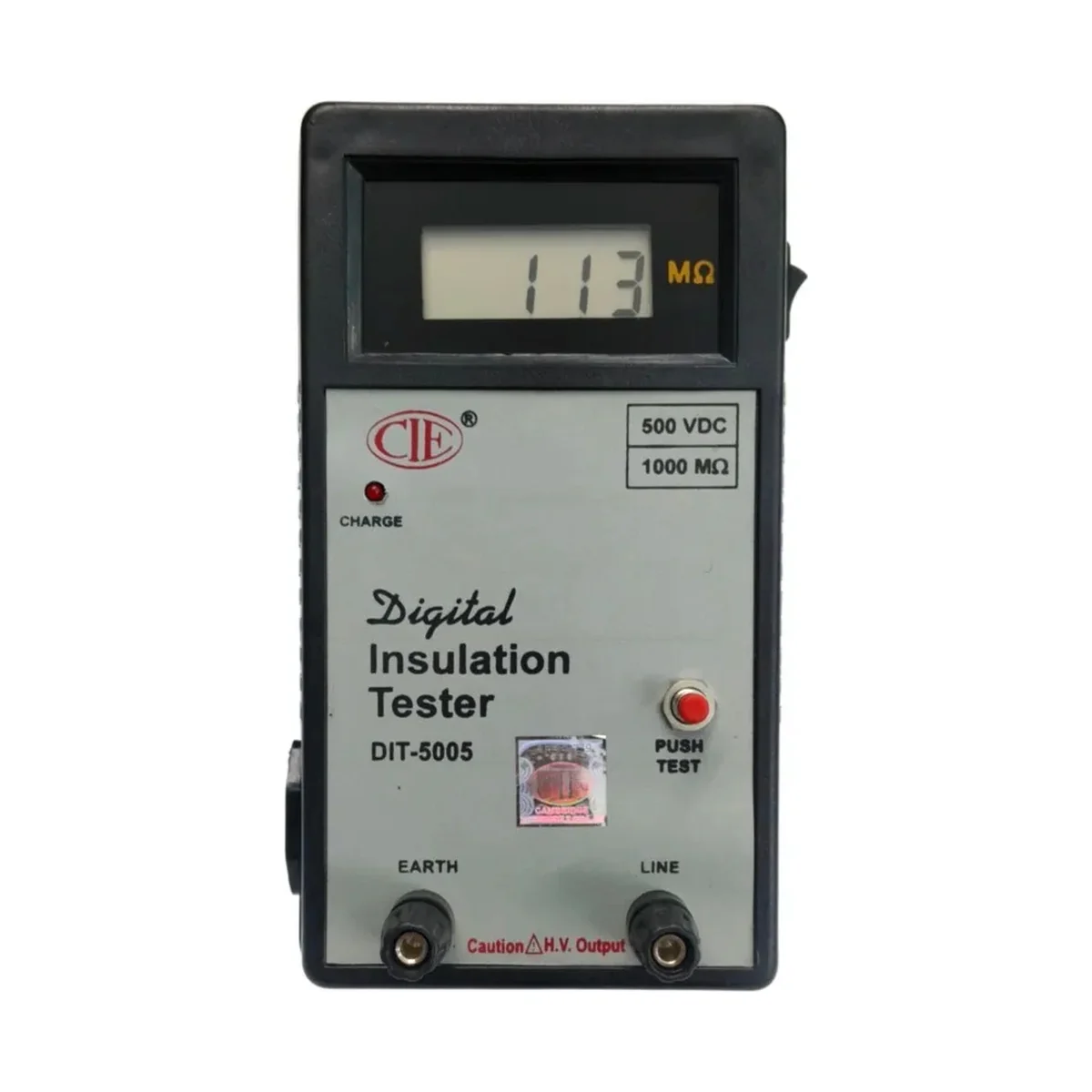
Simplest and most affordable
 DIT-5005
Digital Insulation Tester
One push-button test at 500 V or 1000 V with a direct megohm reading. A rugged ABS body, rechargeable, and you can use it hand-held or on the bench. The right choice for electricians, installers and anyone testing LV wiring and equipment.
₹4,530
₹6,800 33% off
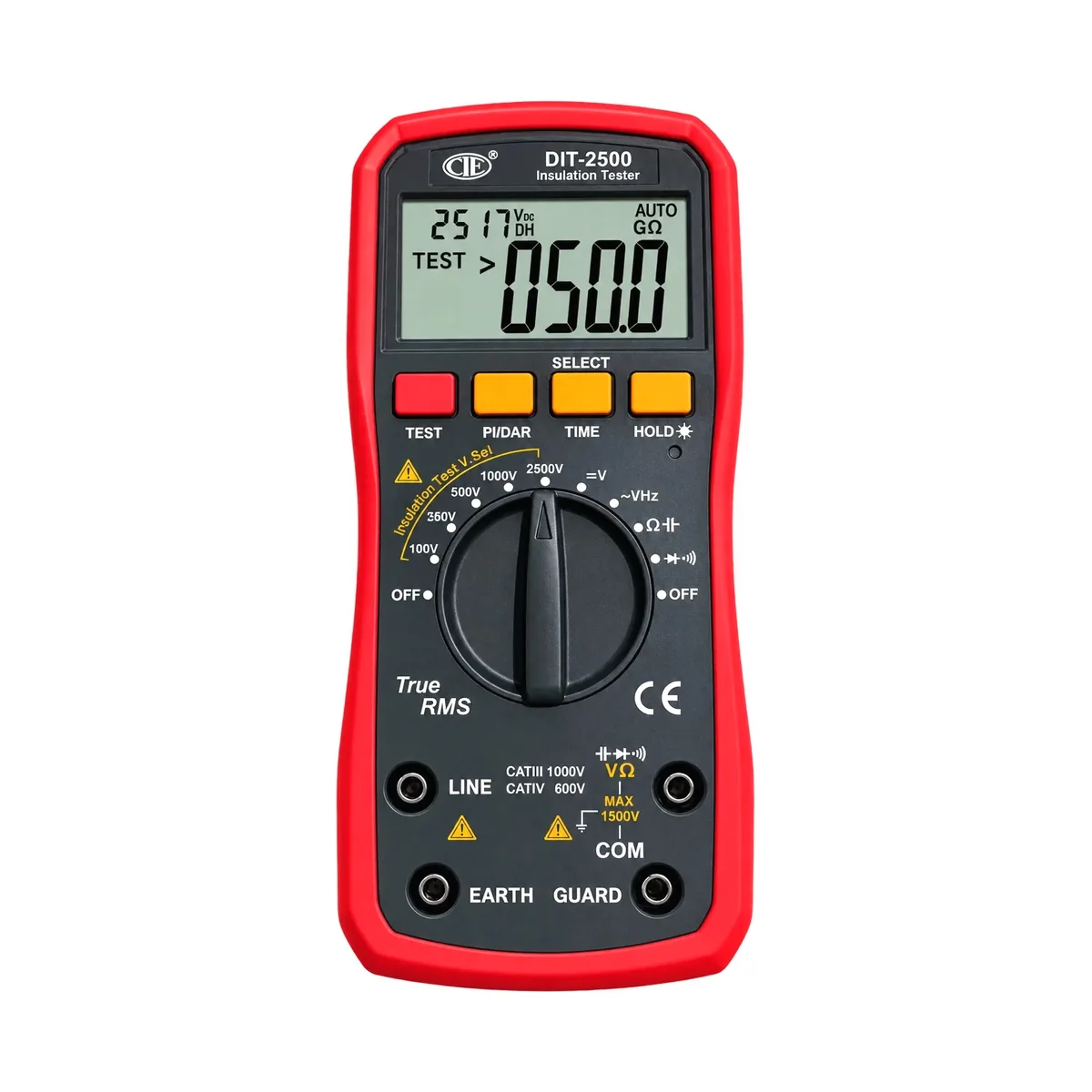
Best all-rounder
DIT-2500
Digital Insulation Tester + Multimeter - up to 2500 V
Five test voltages, PI and DAR with a timer, and a full True-RMS multimeter in the same instrument. One tool covers insulation, voltage, resistance, capacitance and continuity. The pick for maintenance engineers and commissioning teams.
₹8,500
₹12,740 33% off
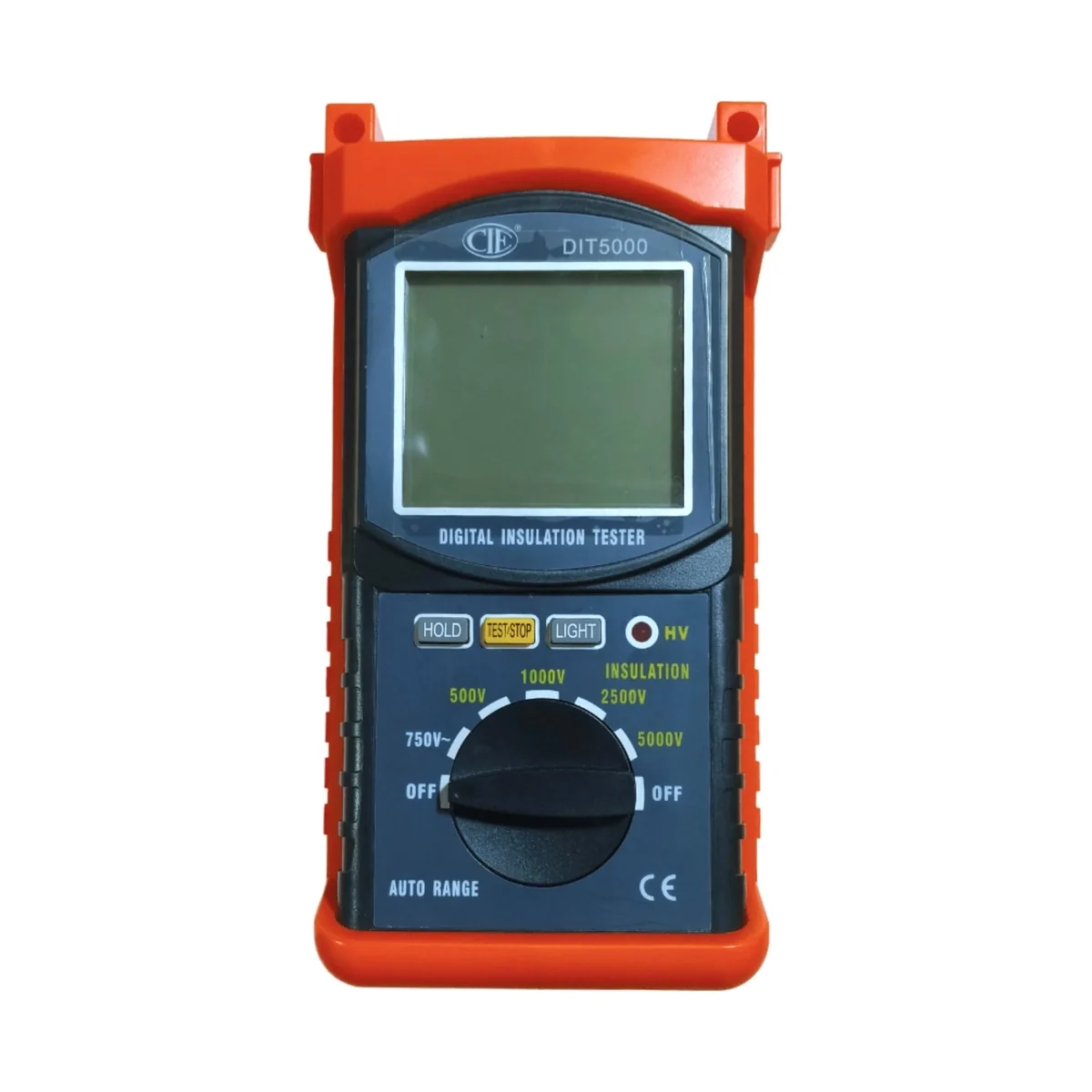
For high voltage work
DIT-5000
Digital Insulation Tester - up to 5000 V / 200 GΩ
Auto-ranging to 5000 V and 200 GΩ with a high-voltage LED that tells you when the output is live. Choose it for HT motors, cables and transformers.
₹11,330
₹16,990 33% off
Analog testers are still available
Hand-driven analog testers generate their own test voltage from a crank, so they need no batteries and no mains, and the needle shows a trend at a glance. Motorised models hold a steady voltage for long tests. If that suits how you work, the CIE analog range is still in the shop, in single-range and multirange versions.
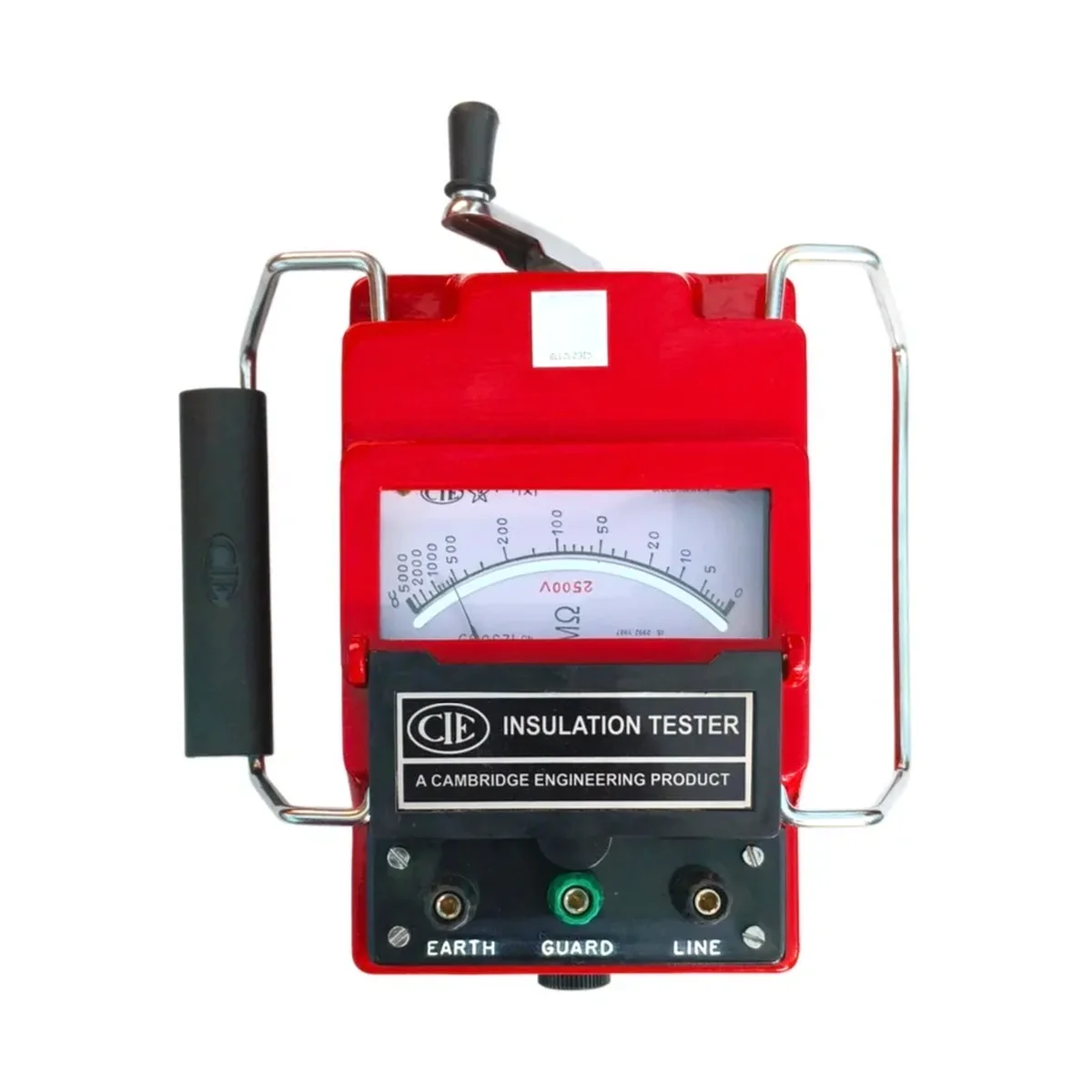
Hand-driven analog
CIE/444
Insulation Tester - Metal Body, Hand-Driven
A hand-cranked tester in an anti-magnetic aluminium body, in single-range configurations from 100 V to 5000 V. No batteries to run flat.
From₹8,210
₹12,320 33% off
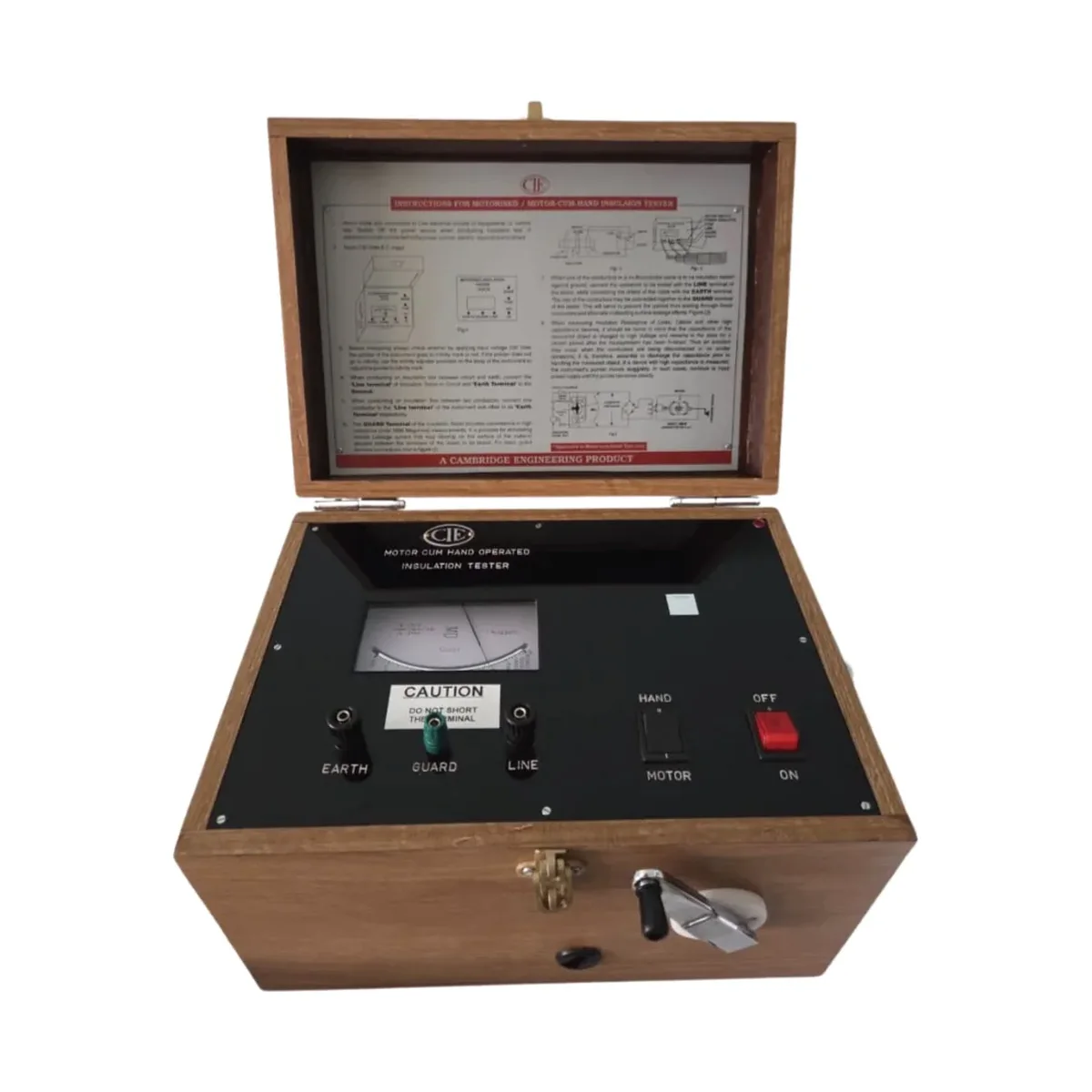
Motor or hand drive
CIE/777 HM
Motor-cum-Hand Driven Insulation Tester
A motor-cum-hand-driven tester for sustained tests, with the hand crank as a backup.
From₹26,900
₹40,360 33% off
Common mistakes
- Testing live equipment. Insulation testing is for de-energised, isolated equipment only. Prove it dead first.
- Leaving electronics connected. VFDs, soft starters, surge arrestors and meters can be damaged by the test voltage. Disconnect them or test the motor leads alone.
- Forgetting to discharge. Cables and windings store charge after a test. Discharge them through the tester or an earth lead before touching.
- Comparing readings taken at different temperatures. Insulation resistance roughly halves for every 10 °C rise, so note the temperature, or use PI and DAR which cancel it out.
- Using a low-voltage tester on HV equipment. A 500 V test says little about a 6.6 kV motor.
Can I use a multimeter instead of an insulation tester?
No. A multimeter measures resistance with only a few volts, so it cannot find the weaknesses that appear at working voltage. An insulation tester applies hundreds or thousands of volts to stress the insulation the way real operation does.
What is a good insulation resistance reading?
It depends on the equipment and standard. For LV installations IEC 60364 expects at least 1 MΩ at 500 V. For rotating machines IEEE 43 suggests a minimum of about 1 MΩ per kV of rated voltage plus 1 MΩ. Healthy equipment usually reads far above these minimums, and a falling trend matters more than one number.
Do I need 2500 V or 5000 V for a 415 V motor?
No. A 415 V motor is normally tested at 500 V or 1000 V. Higher voltages are for HT equipment and could stress LV insulation.
Rechargeable or AA batteries?
Rechargeable (DIT-5005 and DIT-2500) is cheaper to run and convenient on a bench. AA batteries (DIT-5000) can be swapped in the field when you are far from a charger and have no downtime.
Is a GST invoice provided?
Yes, every OhmKart order includes a GST tax invoice. Add your GSTIN at checkout and the invoice is issued to your business.