The short answer
Household and basic electrical work: the DM 235 or the Vartech M 890. Anything with drives, LED lighting or switching loads: a True-RMS meter such as the DM 321T or Vartech V 92. Electronics repair and lab work: the V 980 (20,000 counts) or the bench V 981+.
What a multimeter measures
A digital multimeter reads voltage, current and resistance, and most also test continuity and diodes, with many adding capacitance, frequency and temperature. It is the first instrument for any fault-finding job: is there supply, is this wire continuous, is that component open?
The specifications that matter
Counts and resolution
The count is how finely the display can divide a range. A 2000-count meter shows 1.999 on its 2 V range; a 6000-count meter shows 5.999 on its 6 V range; a 20000-count meter shows 19.999. More counts means finer detail, which matters for low-voltage electronics where a few millivolts decide whether a circuit works. For mains work, 2000 counts is plenty.
True RMS
On a clean sine wave an ordinary meter reads correctly. Drives, dimmers, LED drivers and computers distort the waveform, and an average-responding meter reads wrong. A True-RMS meter reads the real value. If you work near any of these loads, it is worth having.
Auto-ranging or manual
Auto-ranging picks the range for you and is faster and harder to misuse. Manual ranging is simpler and cheaper, and some technicians prefer the control.
Safety category
The CAT rating decides where a meter may safely be used. A meter for electronics benches does not need the rating of one used at a distribution board. Match the meter to where you work, and use leads with the same rating. Our guide to CAT ratings explains the categories.
Useful extras
- Capacitance and frequency for electronics repair.
- Temperature probe for HVAC and heating work.
- NCV (non-contact voltage) to spot live wires without touching.
- Backlight and holster for site use.
- PC interface on bench meters if you log readings.
The range compared
| Model | Counts | True RMS | Ranging | DC voltage | Notable extras |
|---|---|---|---|---|---|
| CIE DM 235 | 2000 | No | Manual | 1000 V | hFE transistor test, capacitance, holster, 9 V battery |
| CIE DM 321T | 2000 | Yes | Manual | 1000 V | Backlight, capacitance, hFE, holster, 2 AA batteries |
| Vartech V MAS 830 LB | 2000 | No | Manual | 600 V | Backlit, hFE, holster with stand |
| Vartech V 830 L+ | 2000 | Yes | Manual | 600 V | NCV, backlight, torch, data hold, compact |
| Vartech M 890 | 2000 | Yes | Manual | 1000 V | Capacitance, hFE, live-wire test, torch |
| Vartech V 890 D | 2000 | Yes | Manual | 1000 V | 20 A, capacitance to 20 mF, NCV, frequency |
| Vartech V 8222 G | 2000 | Yes | Manual | 1000 V AC and DC | Frequency, capacitance, temperature |
| Vartech V 68 | 4000 | Yes | Auto and manual | 1000 V | Duty cycle, frequency to 20 MHz, capacitance to 100 mF |
| Vartech V 92 | 6000 | Yes | Auto | 600 V | NCV, temperature, frequency, capacitance |
| Vartech V 92 S | 6000 | Yes | Auto with smart detect | 600 V | Dual display, bar graph, frequency to 10 MHz |
| Vartech V 980 | 20000 | Yes | Manual | 1000 V | 0.1% DC accuracy, conductance, hFE, frequency |
| Vartech V 981+ | 30000 | Yes | Auto | 1000 V | Bench unit, colour TFT, PC interface |
Which one should you buy?
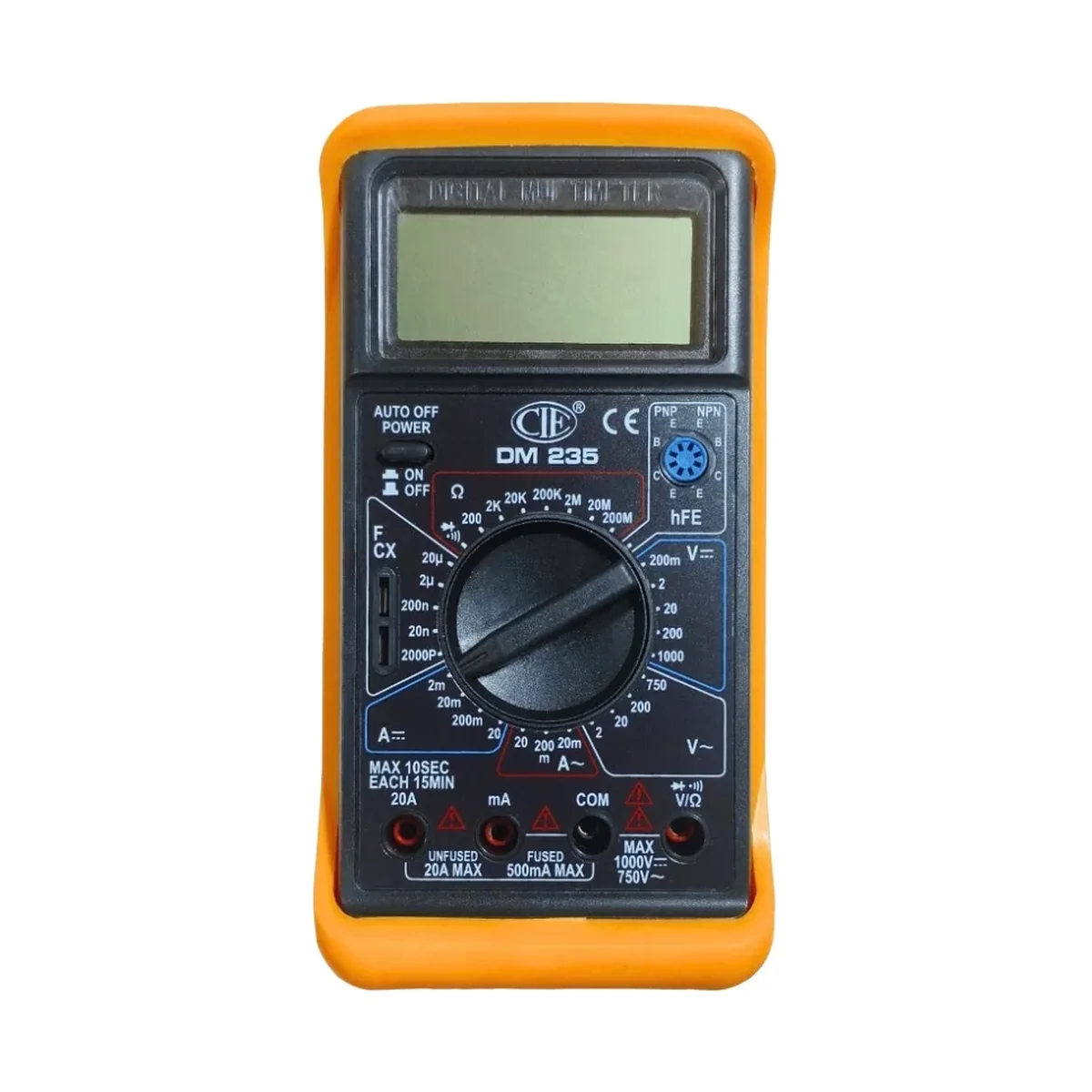
Simple, reliable, for basic work
 DM 235
Digital Multimeter - 3½-digit
Voltage to 1000 V DC, current to 20 A, resistance, capacitance, continuity and transistor test with a holster. A solid choice for general electrical and workshop use.
₹1,700
₹2,550 33% off
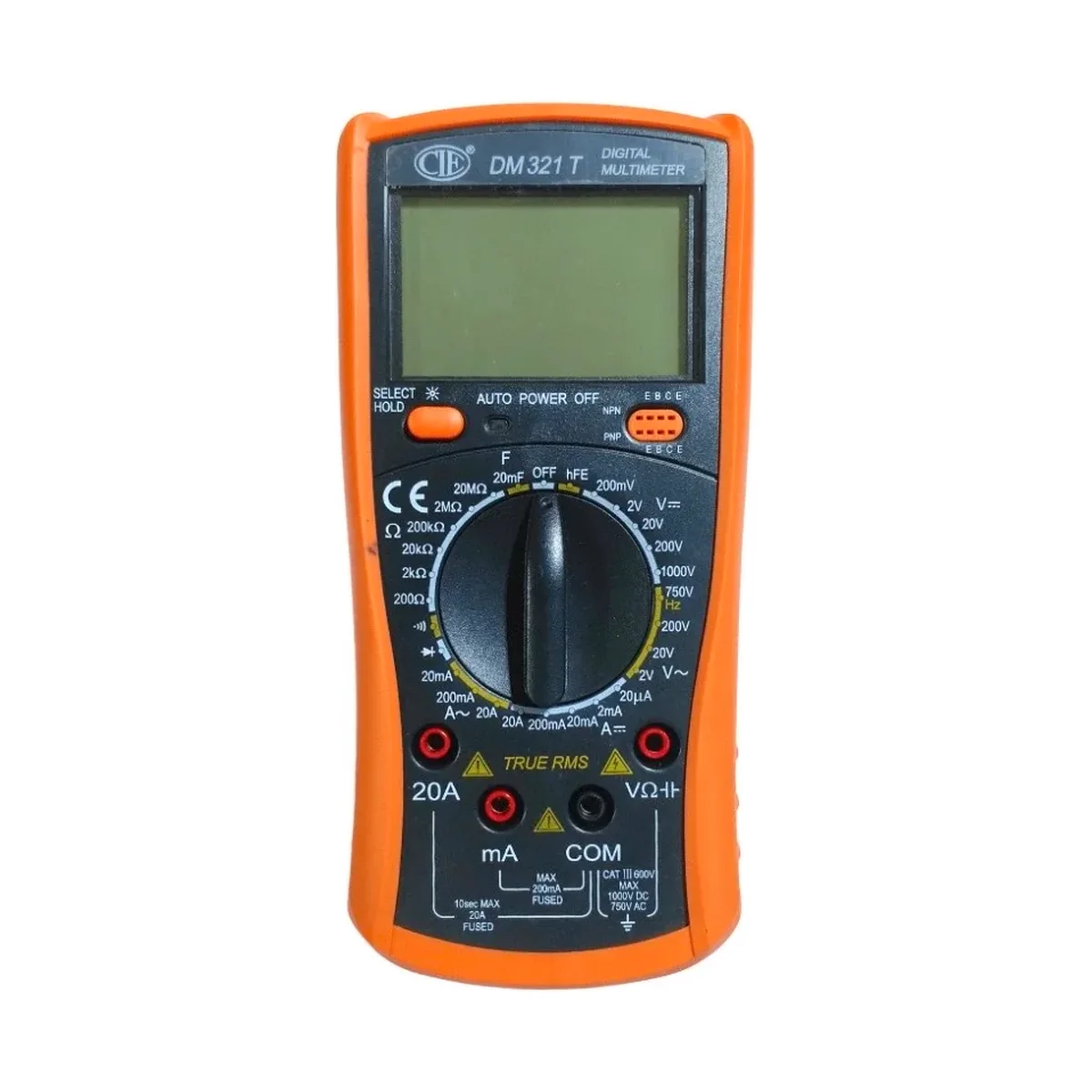
Step up to True RMS
DM 321T
True-RMS Digital Multimeter - Manual Ranging, 3½-digit
The same layout as the DM 235 with True RMS for distorted loads, backlight and a holster. Best CIE value for panel and maintenance work.
₹2,830
₹4,250 33% off
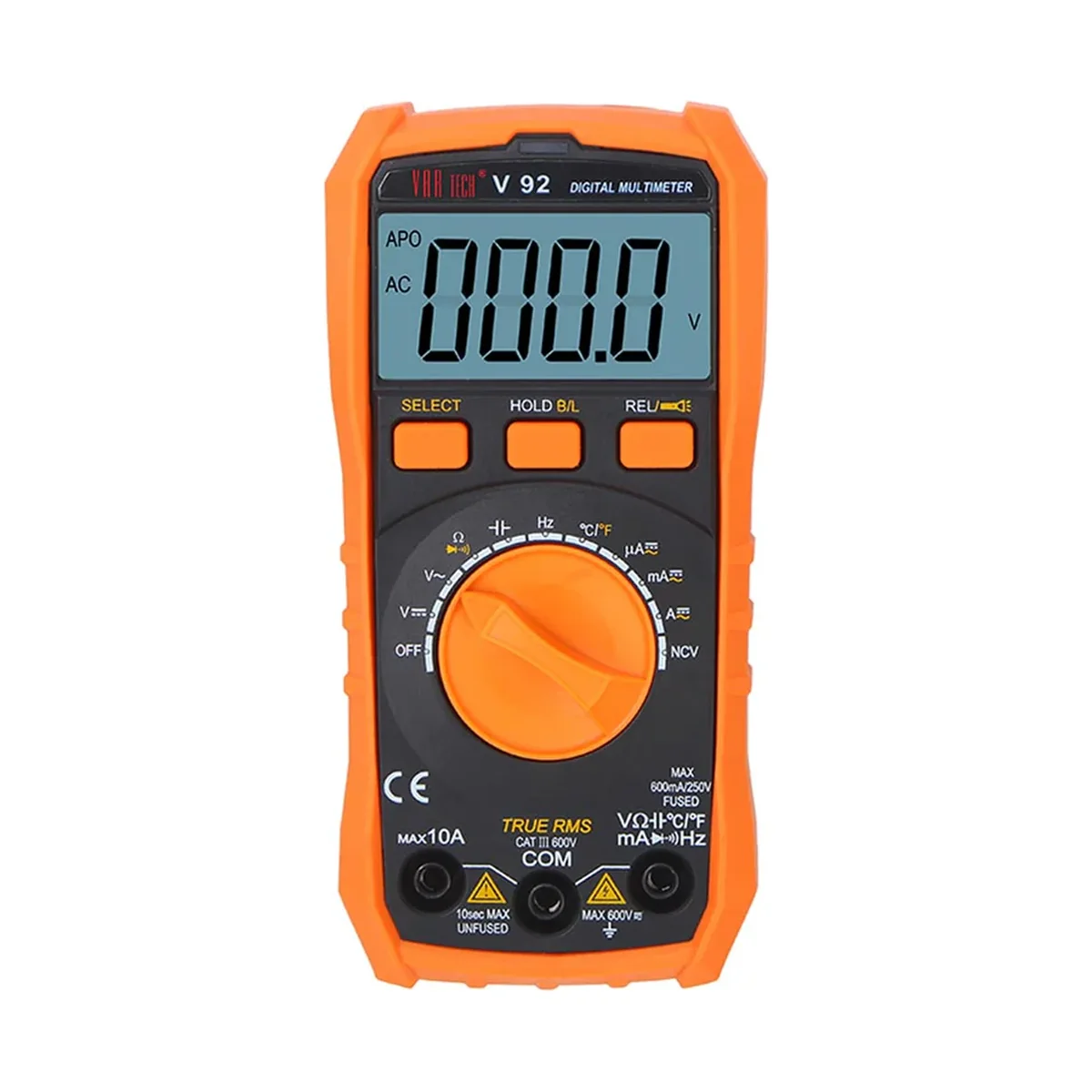
Best all-rounder
 V 92
Digital Multimeter True RMS Auto Ranging
Auto-ranging True RMS with 6000 counts, NCV, temperature, frequency and capacitance in a compact body. It does almost everything a technician needs.
₹1,700
₹2,600 35% off
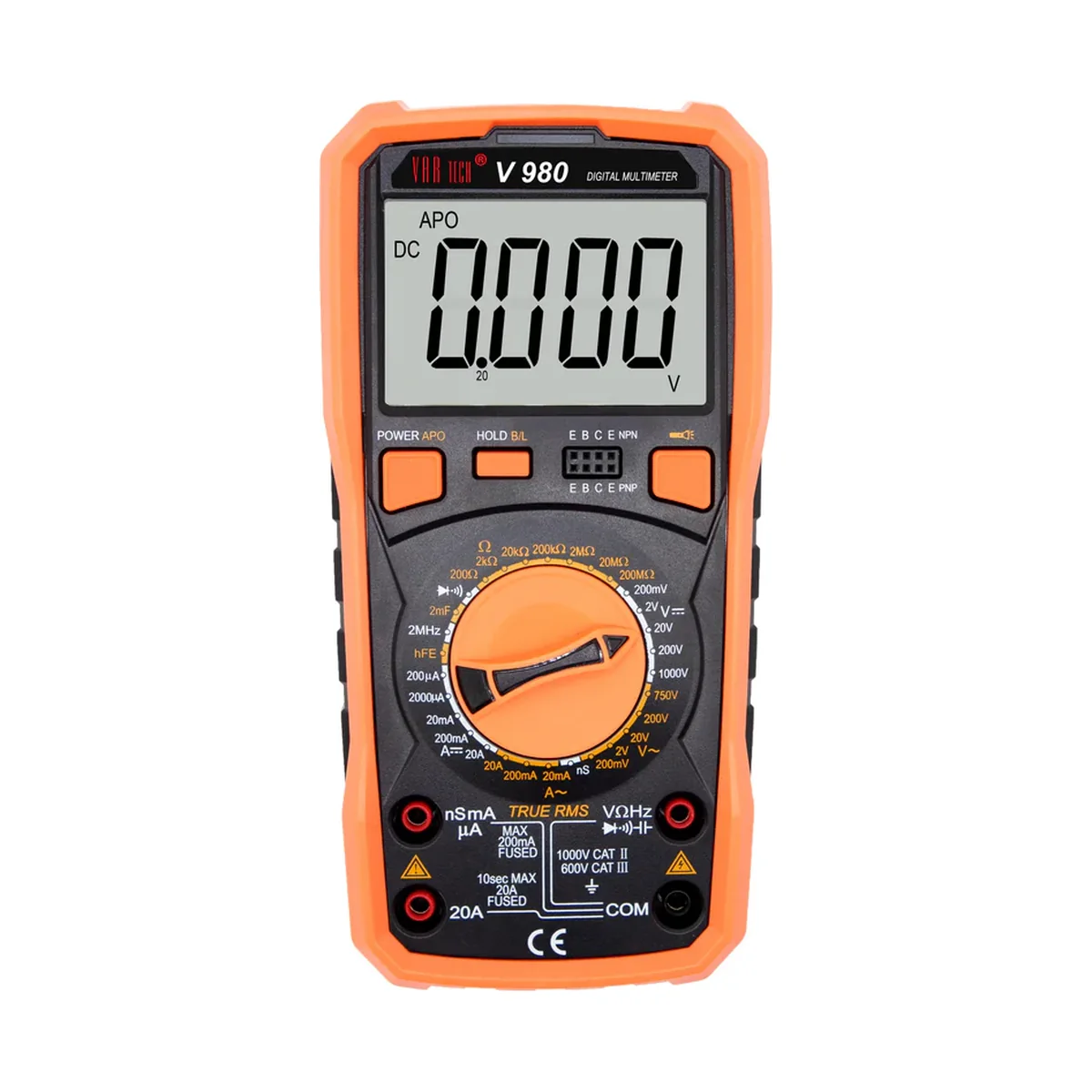
Best for electronics
V 980
True RMS Digital Multimeter 20000 Counts
20,000 counts and 0.1% DC accuracy for low-voltage design, repair and lab-bench work.
₹3,690
₹6,000 39% off
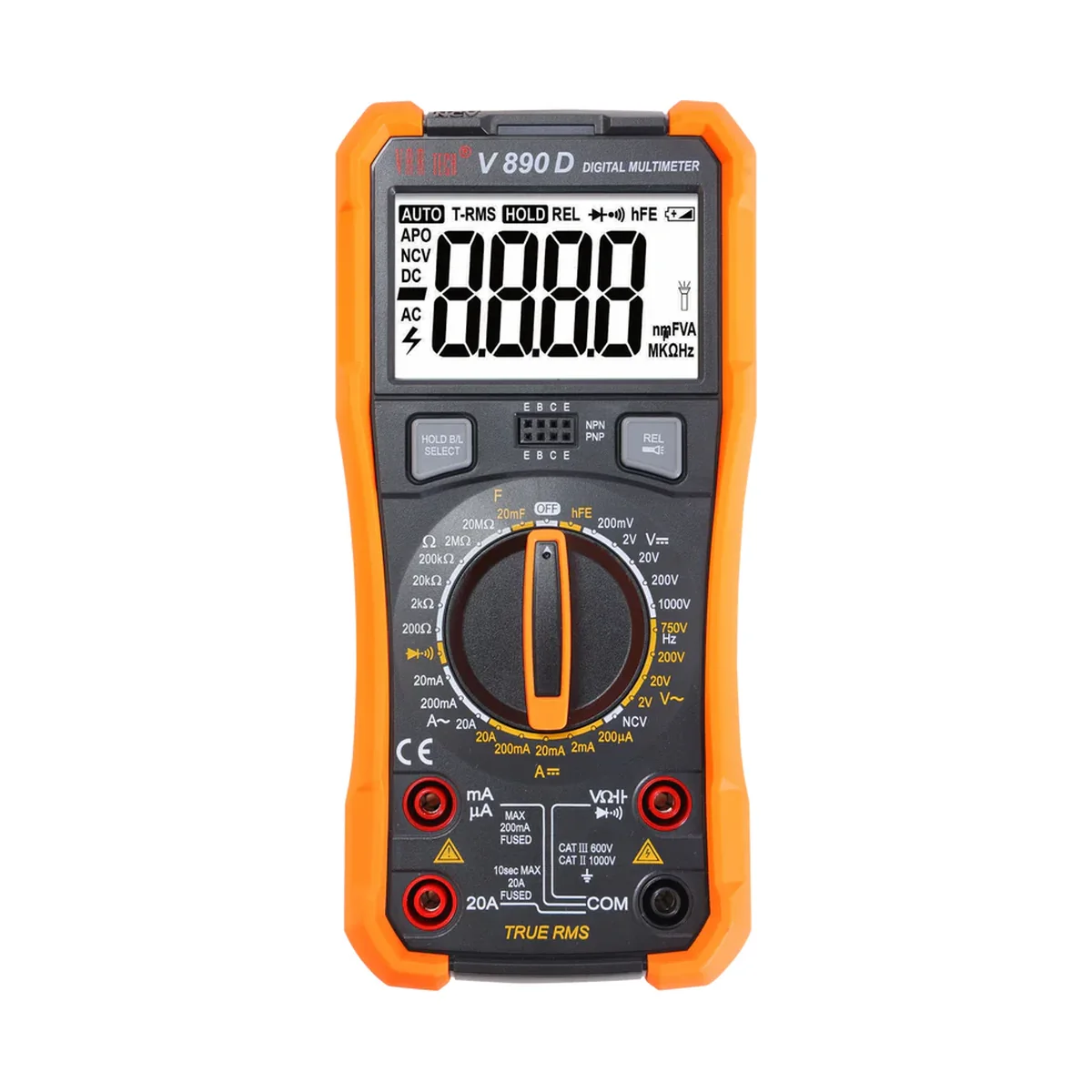
Strong value, full function
V 890 D
Digital Multimeter True RMS 1000V DC / 750V AC 20A
1000 V DC, 750 V AC, 20 A with capacitance, frequency and NCV. A lot of meter for the price.
₹2,150
₹3,500 39% off
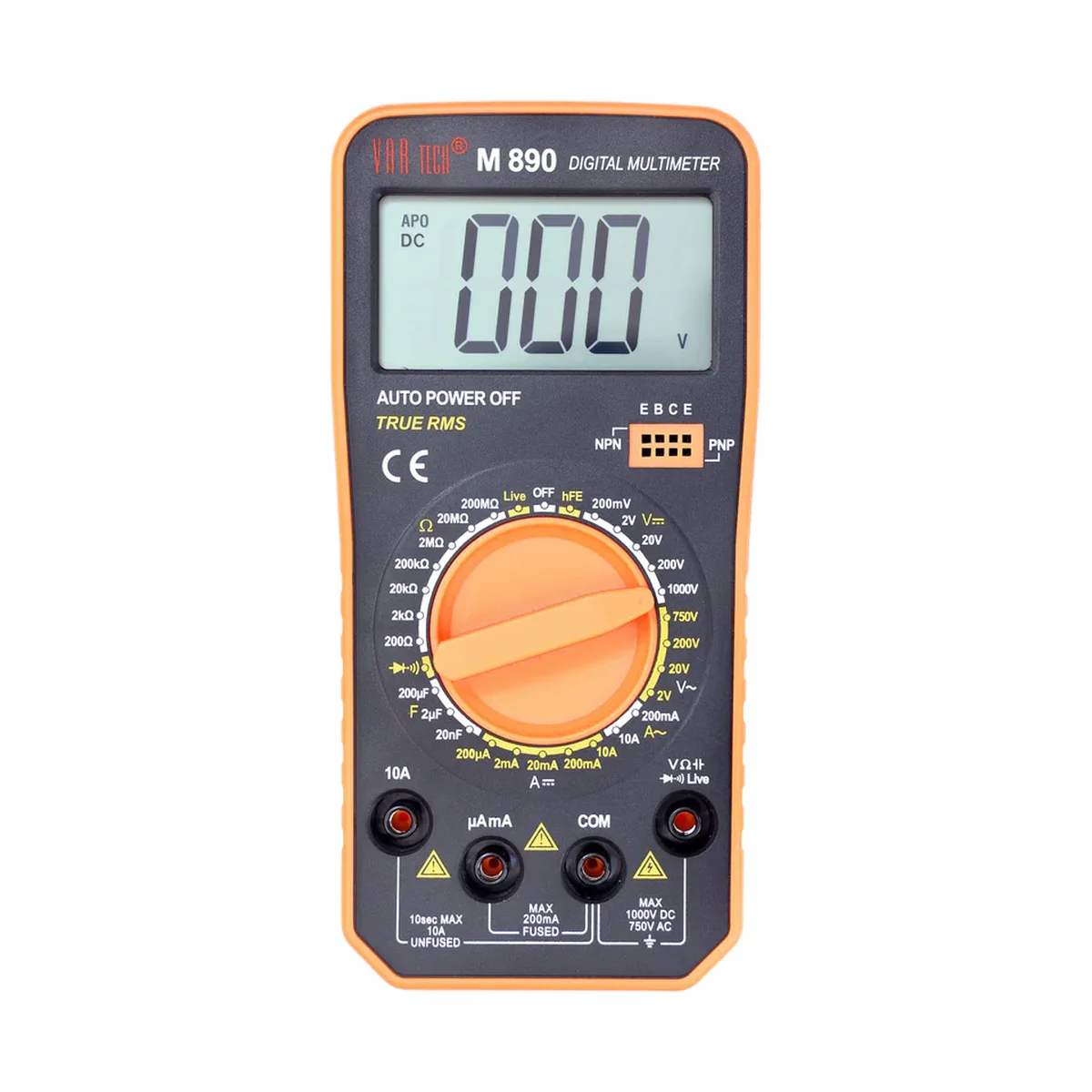
Budget True RMS
M 890
Full Function Digital Multimeter True RMS
True RMS and capacitance at an entry-level price. Good for students and general use.
₹780
₹1,300 40% off
For the lab bench
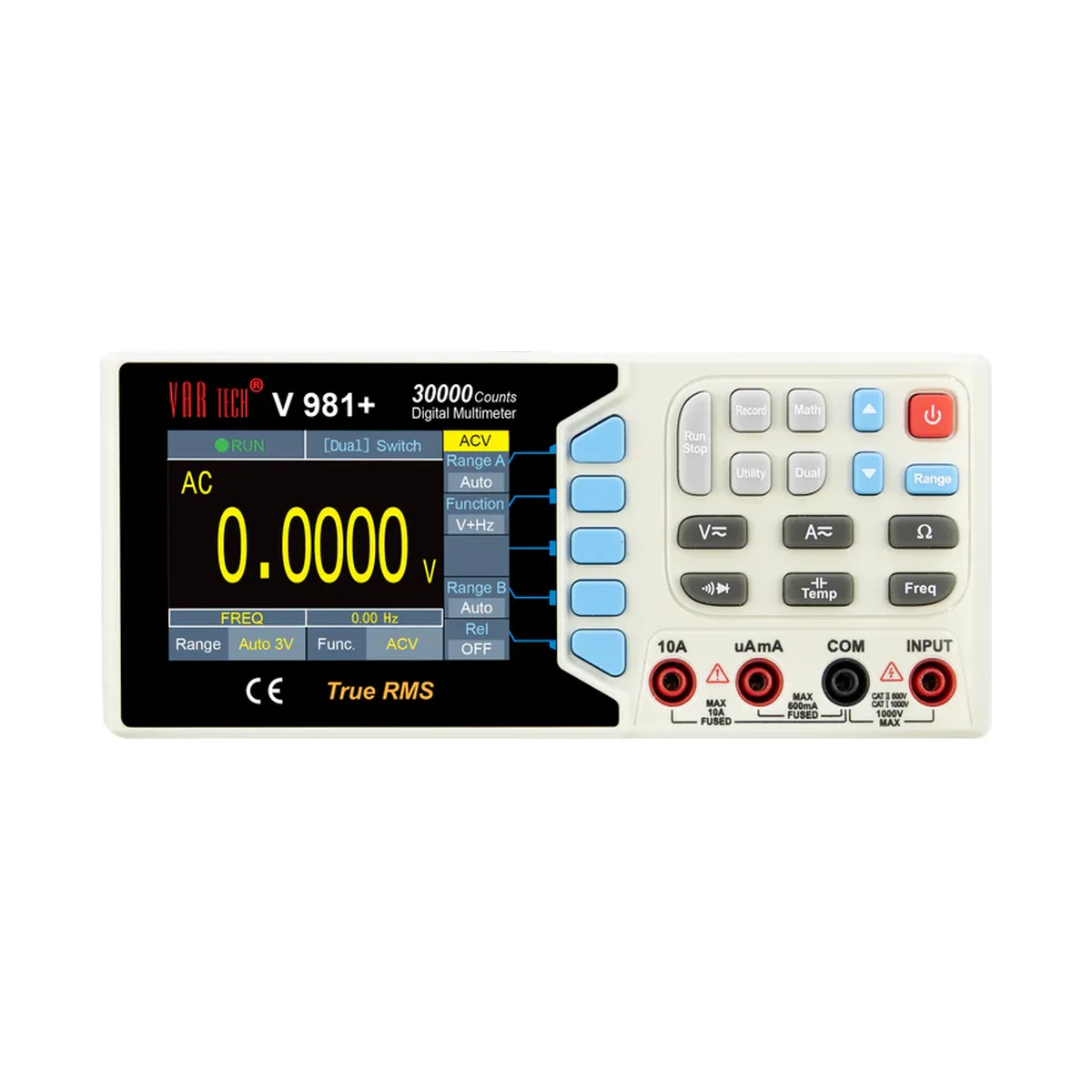
V 981+
Bench Top Digital Multimeter with PC Interface TRMS 30000 Counts
30,000 counts, a 3.5-inch colour display and a PC interface.
₹9,000
₹15,000 40% off
Mistakes to avoid
- Buying on counts alone. A 20,000-count meter is no use at a panel if it lacks the right safety rating.
- Measuring current with the leads in the voltage socket. This blows the fuse or damages the meter.
- Assuming every meter measures AC current. Check the ranges: many basic meters have AC current only on one range or not at all.
- Using worn leads. A good meter with damaged leads is not a safe meter.
What is the difference between the DM 235 and the DM 321T?
The DM 321T adds True-RMS AC measurement, a backlight and runs on 2 AA batteries instead of a 9 V. The DM 235 is the simpler and more economical meter.
Do I need True RMS?
If you measure only plain sine waves such as a mains socket, no. If you work near drives, LED lighting, computers or chargers, yes.
What does auto-ranging mean?
The meter chooses the right range for the signal, so you simply connect and read.
Can I use a multimeter for insulation testing?
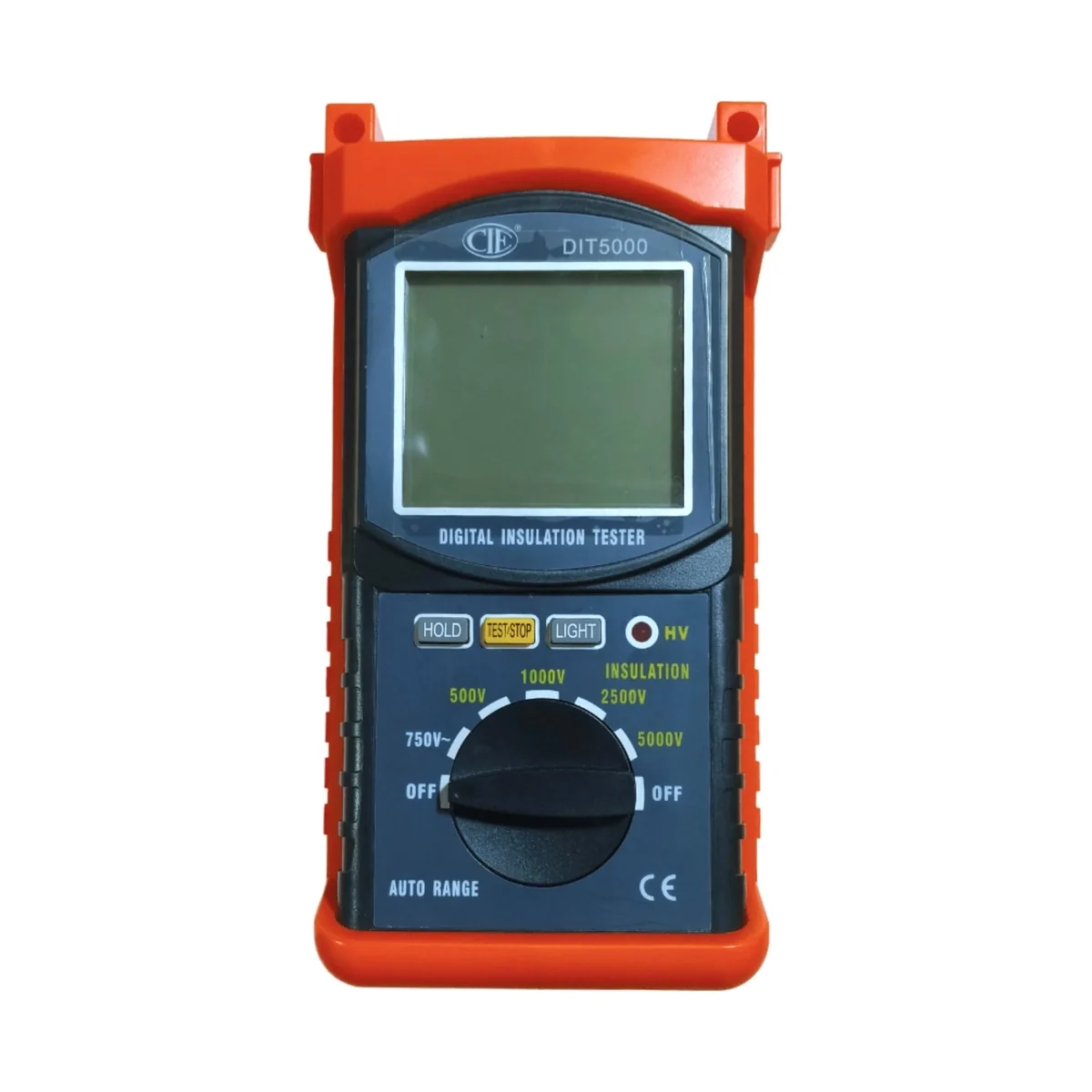
No. For that you need an insulation tester, which applies hundreds or thousands of volts. See the DIT range.