The short answer
CAT ratings tell you where on an electrical installation a meter can be used safely. CAT II is for plug-in loads, CAT III for panels, feeders and fixed installations, and CAT IV for the supply origin. Higher categories survive bigger voltage spikes. Choose a meter at least as high as the highest category you will work in.
Why categories exist
A 230 V circuit does not behave the same everywhere. Close to the supply transformer, there is very little impedance between you and the source, so a surge or fault releases a lot of energy. At the end of a long branch circuit, wiring impedance limits it. The measurement categories in IEC 61010-1 rate how much transient energy a meter can withstand and stay safe at each point.
| Category | Where it applies | Examples |
|---|---|---|
| CAT I | Protected electronic circuits, not directly connected to mains | Equipment on the secondary of a transformer, low-energy signal circuits |
| CAT II | Single-phase loads that plug in | Sockets, appliances, portable tools, domestic equipment |
| CAT III | Fixed installation inside a building | Distribution boards, busbars, feeders, three-phase motors, industrial equipment |
| CAT IV | The origin of the installation | Service entrance, utility meter, overhead and underground supply lines |
What the voltage number means
The voltage after the category (for example CAT III 600 V) is the maximum working voltage the meter is rated for in that category. The category and the voltage together set the transient the meter is tested to withstand. Under IEC 61010-1, the impulse withstand levels are:
| Rating | CAT II | CAT III | CAT IV |
|---|---|---|---|
| 600 V | 4 kV | 6 kV | 8 kV |
| 1000 V | 6 kV | 8 kV | 12 kV |
So a CAT III 1000 V meter is built to withstand a larger spike than a CAT III 600 V meter, and a CAT IV 600 V meter more than a CAT III 600 V one. Note that a higher voltage rating in a lower category is not the same as a higher category: a CAT II 1000 V meter is not suitable for a distribution board.
Matching the meter to the job
- Electronics bench, appliance repair, plug-in loads: CAT II is adequate.
- Distribution boards, motor control centres, busbars and industrial plant: CAT III.
- Anything at or near the incoming supply, including outdoor lines and the service panel: CAT IV.
- If you are not sure, choose the higher category. The cost difference is small compared to the risk.
CAT ratings of OhmKart instruments
- CIE DIT-2500 insulation tester and multimeter: CAT III 1000 V and CAT IV 600 V.
- CIE DCM 2250 TR and DCM 5410 TR clamp meters: CAT III 600 V.
- For every other model, the safety category is listed on the product page and in its datasheet. Check it before ordering if you work on panels or supply equipment.
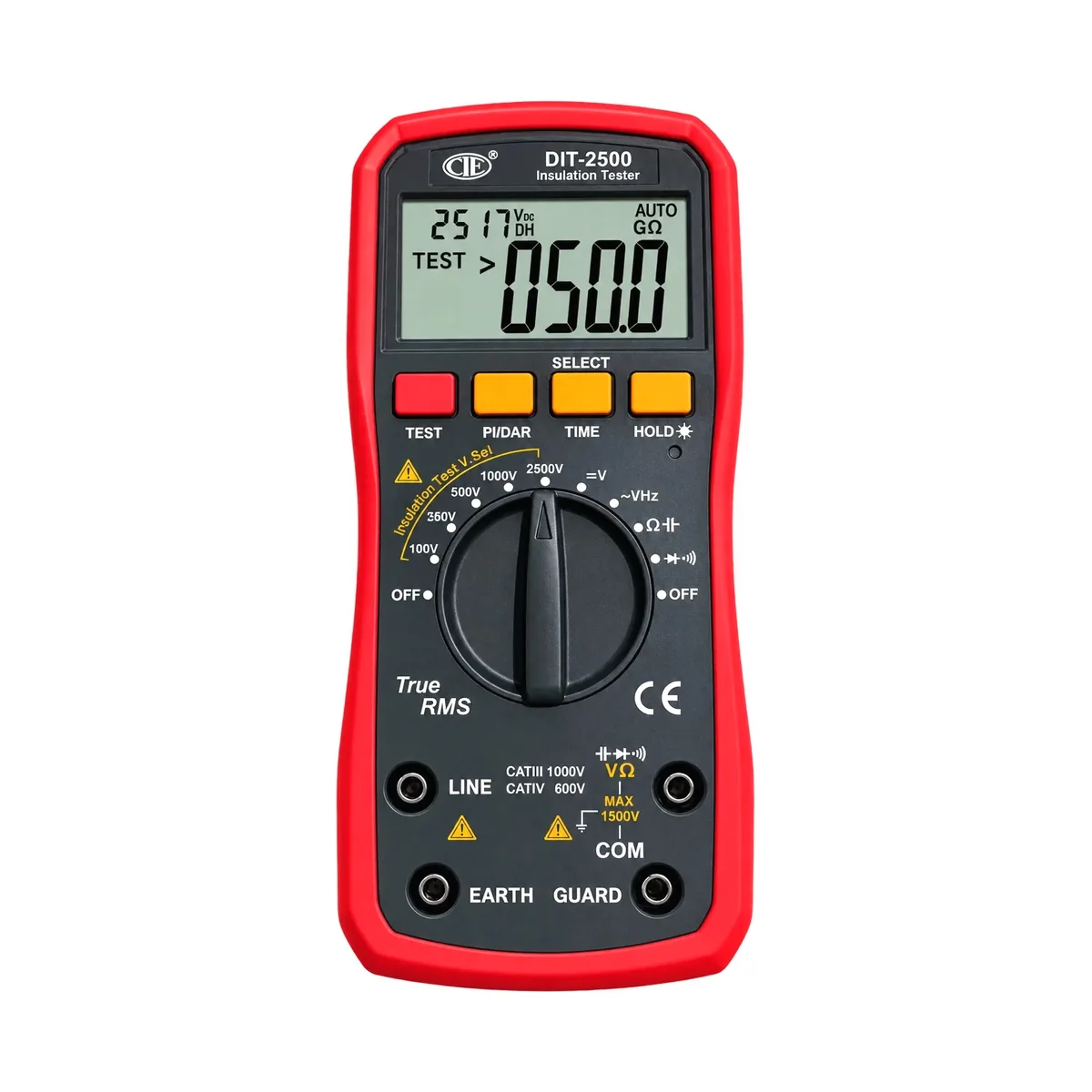
CAT III 1000 V and CAT IV 600 V
 DIT-2500
Digital Insulation Tester + Multimeter - up to 2500 V
The highest rating in our range, for work at panels and supply equipment as well as bench testing.
₹8,500
₹12,740 33% off
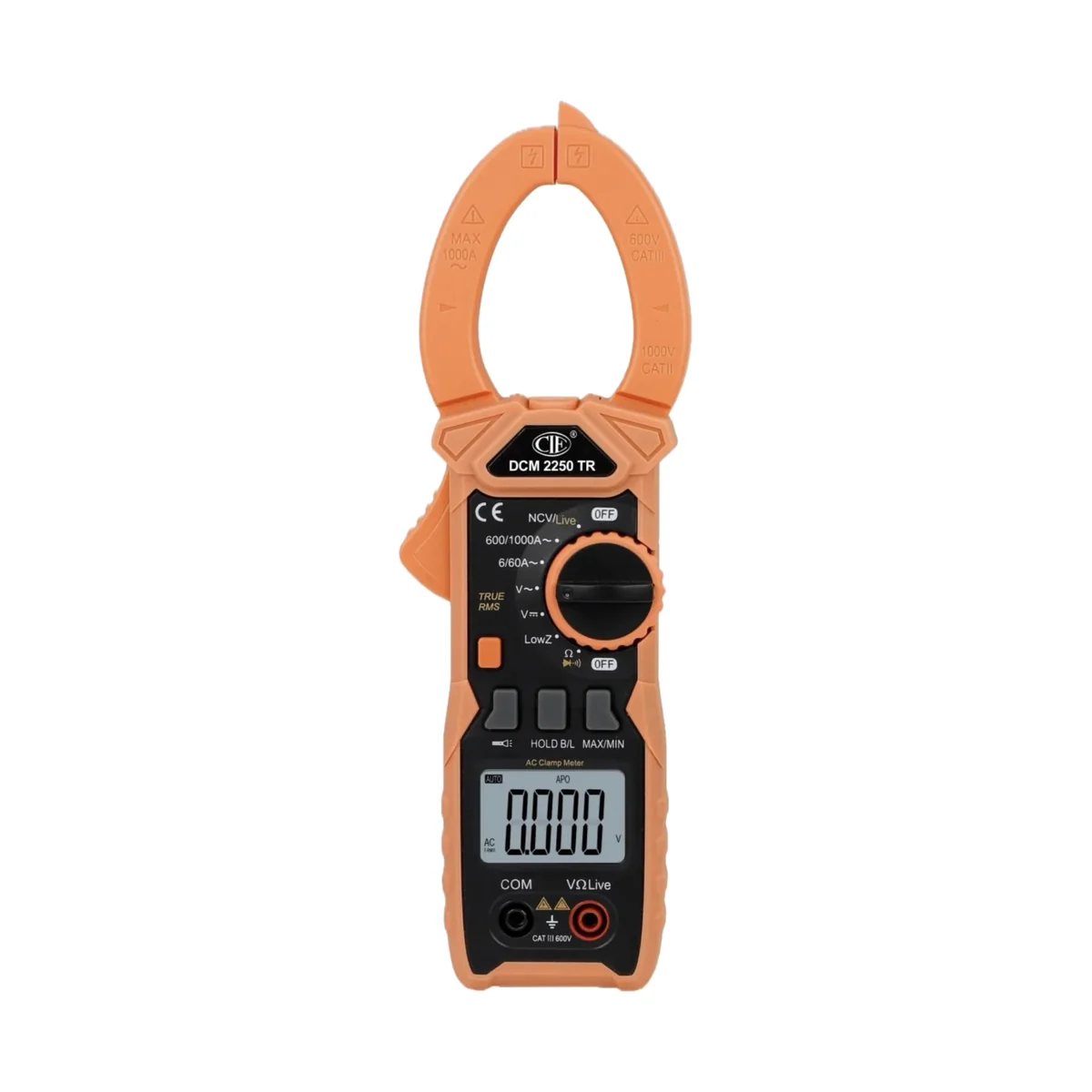
CAT III 600 V clamp meter
DCM 2250 TR
Digital Clamp Multimeter - True-RMS AC, 1000 A
Rated for panels and distribution boards, with Low-Z mode to avoid ghost voltage readings.
₹3,590
₹5,380 33% off
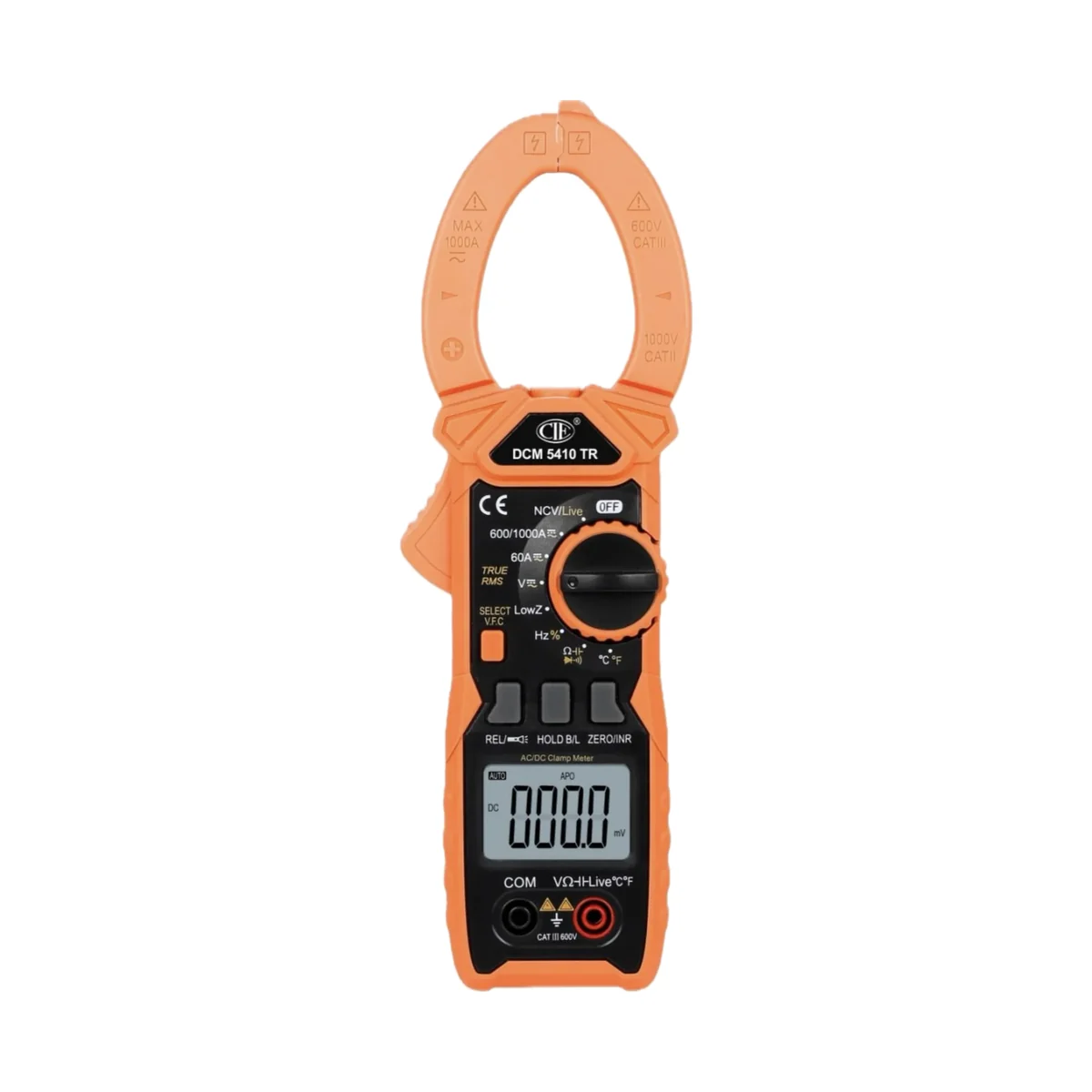
CAT III 600 V, AC and DC
DCM 5410 TR
Digital Clamp Multimeter - True-RMS AC/DC, 1000 A
The same safety rating with DC current as well.
₹5,850
₹8,780 33% off
Beyond the rating
- Use leads that carry the same rating. The lowest-rated part sets the rating of the whole setup.
- Check leads for cracked insulation before each use.
- Use the right fused input for the measurement. Fuses are part of the safety system.
- Keep your fingers behind the guards on the probes.
Is a higher voltage rating safer?
Not on its own. The category matters more. CAT III 600 V is the right class for a panel; CAT II 1000 V is not.
Can I use a CAT II meter on a three-phase panel?
You should not. Use CAT III or higher.
Do clamp meters have CAT ratings too?
Yes. The DCM 2250 TR and 5410 TR are CAT III 600 V.