The short answer
Small boards and general repair: the 850 A or the digital 850 D. Phone and laptop boards with faster work: the 857 D. Lead-free, large boards and stored settings: the 861 DW. One bench for hot air and a soldering iron: the 706 (580 W) or the 700 ESD (270 W).
Why hot air
Surface-mount parts, especially ICs with pins on all sides, cannot be removed with an ordinary iron: you cannot heat every pin at once. A hot-air station blows a stream of heated air through a nozzle sized for the package, melting all the solder joints together so the part lifts off, and refits a new one the same way. Control over temperature and airflow is what makes this safe for the board.
Power, temperature and airflow
- Hot-air power sets how quickly the board and part heat up. A 270 W station is enough for small packages such as QFP and SOP. Larger boards, ground planes and lead-free work benefit from 580 W or 1000 W.
- Airflow decides how gently or aggressively the heat is delivered. Too much airflow blows small parts away; too little gives uneven heating. All of these stations let you adjust airflow smoothly.
- Temperature range: all start at 100 °C. The 850 A tops out at 420 °C, the 857 D and 706 at 450 °C, the 850 D at 480 °C, and the 861 DW at 500 °C.
The stations compared
| Model | Hot-air power | Temperature | Airflow | Display | Notable features |
|---|---|---|---|---|---|
| 850 A | 270 W | 100 °C to 420 °C | Up to 24 L/min | Not specified | Low-noise pump in its own enclosure, 3 nozzles |
| 850 D | 320 W | 100 °C to 480 °C | Up to 24 L/min | 3-digit display | PID closed loop, auto cooling and sleep, 3 nozzles |
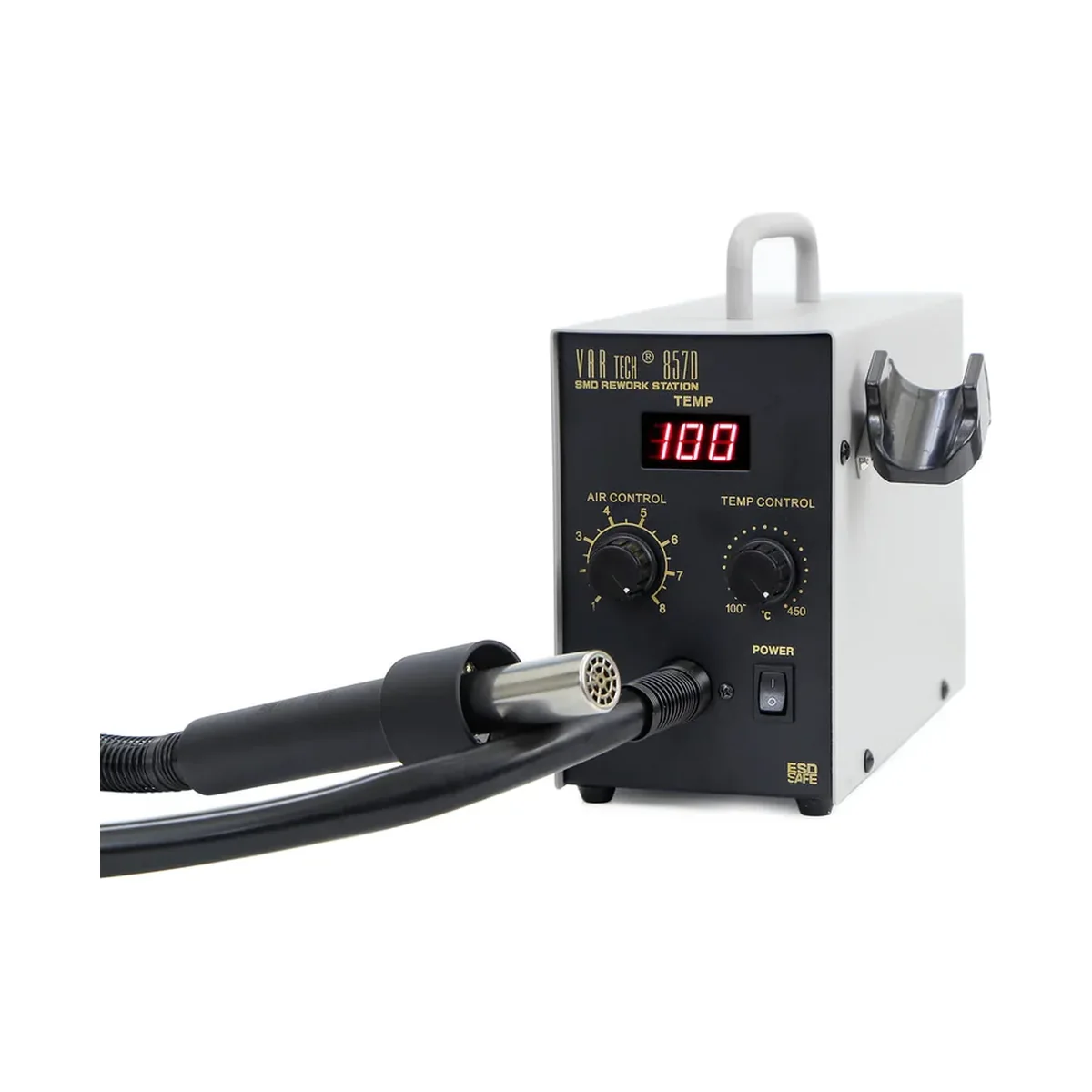
| 857 D | 580 W | 100 °C to 450 °C | Up to 100 L/min | 3-digit LED | Double vortex blower, handle sensor, heats in about 3 s |
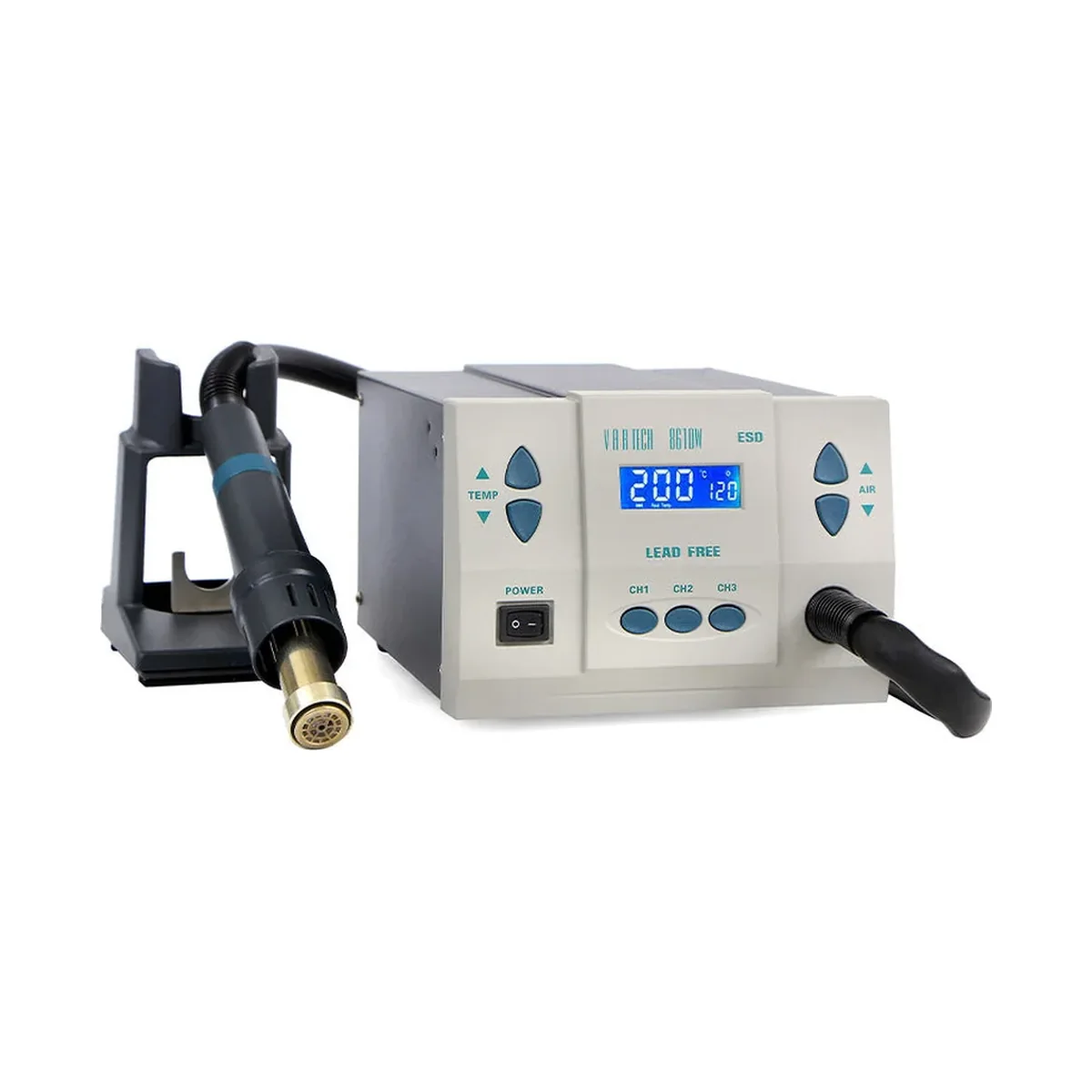
| 861 DW | 1000 W | 100 °C to 500 °C | 1 to 120 L/min | Digital | 3 programmable channels, password and key lock, lead-free |
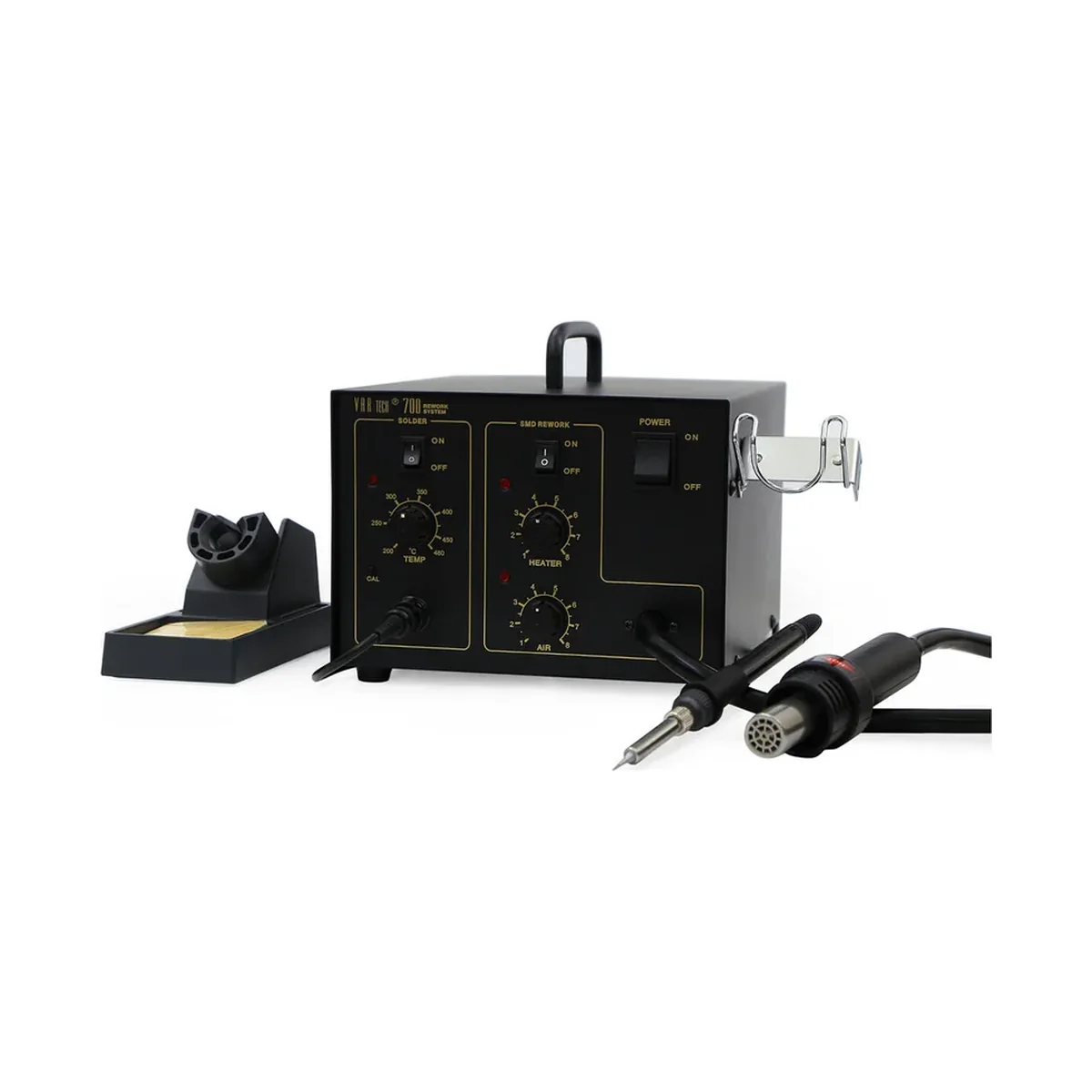
| 700 ESD | 270 W + 50 W iron | 100 °C to 420 °C (iron 200 °C to 480 °C) | Up to 24 L/min | Not specified | Hot air and soldering iron, switched separately |
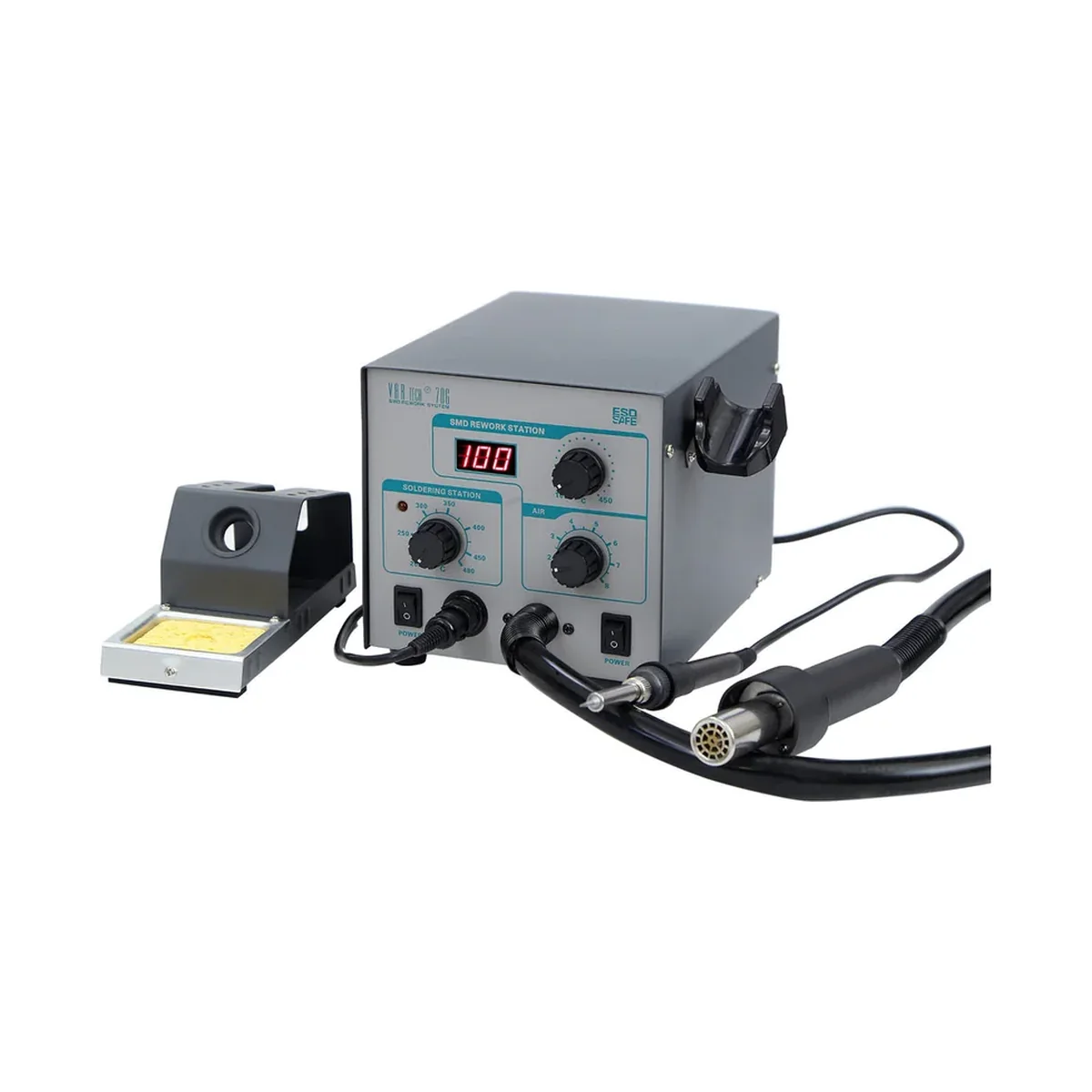
| 706 | 580 W + 50 W iron | 100 °C to 450 °C (iron 200 °C to 480 °C) | Up to 50 L/min | LED, 1 °C resolution | Hot air and soldering iron, closed-loop sensor |
Which one should you buy?
Best value
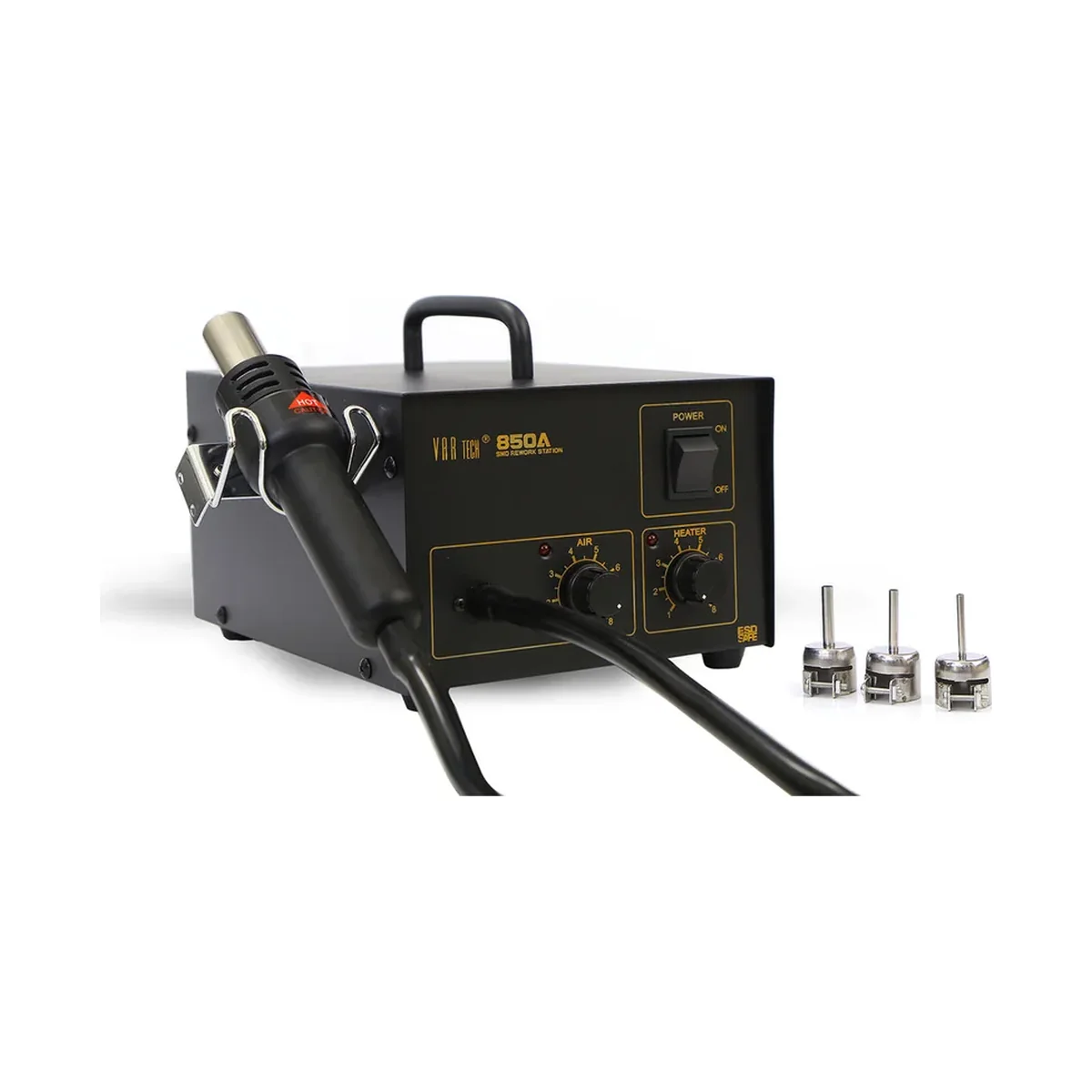
 850 A
SMD Re-Work Station, 270 W
270 W, 100 °C to 420 °C and adjustable airflow. A well-liked, straightforward station for QFP and SOP work.
₹7,550
₹11,000 31% off
Best for regular use
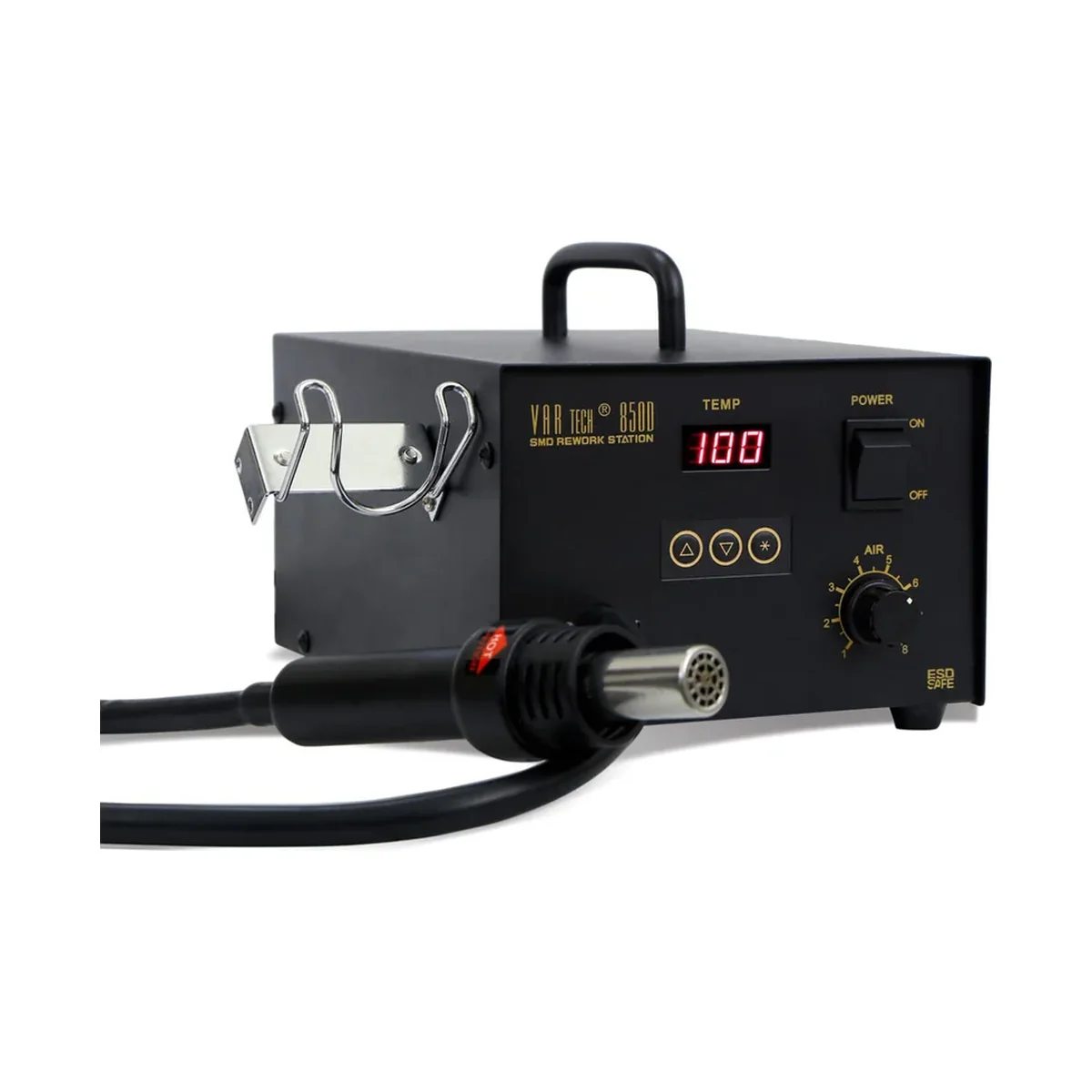
850 D
Digital SMD Re-Work Station, 320 W
320 W with a 3-digit display, PID closed-loop control, soft-touch keys and automatic cooling and sleep. Listed for BGA, CSP, QFP, PLCC and SOP parts.
₹18,300
₹26,000 30% off
Fast and gentle
857 D
Digital SMD Re-Work Station, 580 W
580 W, up to 100 L/min through a double vortex blower, with a handle sensor that puts the station on standby when you put it down.
₹8,600
₹14,000 39% off
Top of the range
861 DW
Lead-Free SMD Re-Work Station, 1000 W
1000 W lead-free station with three stored channels, each with its own temperature and airflow, plus password and key lock.
₹23,000
₹30,000 23% off
Hot air plus iron, with display
706
2-in-1 Soldering and SMD Re-Work Station, 580 W + 50 W
580 W hot air and a 50 W soldering iron in one box, with an LED display and closed-loop sensor.
₹10,700
₹16,000 33% off
Hot air plus iron, compact
700 ESD
2-in-1 Soldering and SMD Re-Work Station, 270 W + 50 W
270 W hot air and a 50 W soldering iron that can be used together or separately. Built for long hours on an assembly line.
₹12,500
₹19,000 34% off
BGA work: add these
Ball-grid-array chips have their joints hidden under the package, so they need even heat from below as well as from above. A pre-heater warms the board underneath, a fixture holds it steady, and the hot-air station works from the top.
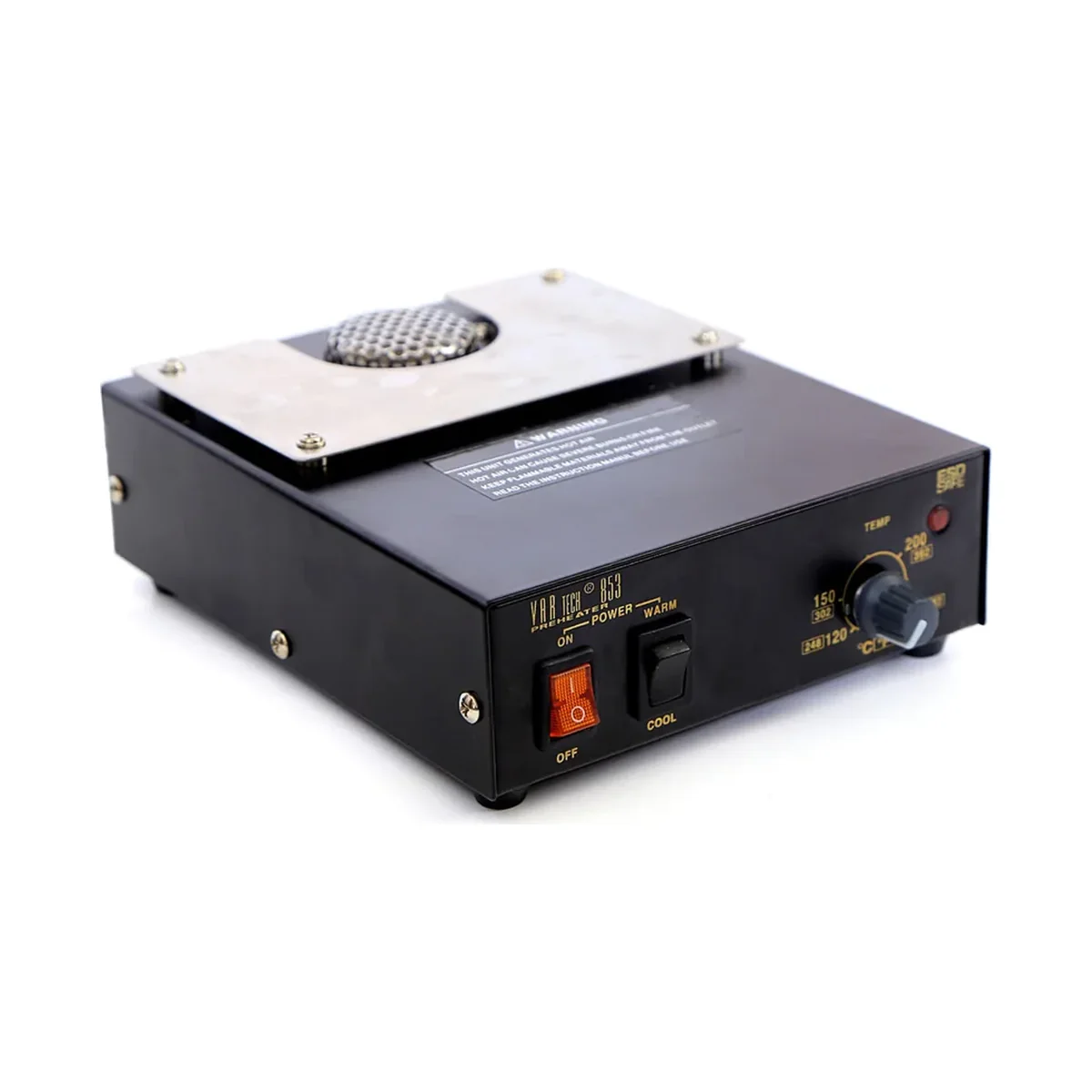
BGA pre-heater
853 ESD
Pre-Heater for BGA Re-Work System, Temperature Controlled
460 W, 120 °C to 250 °C. Reaches 250 °C in about 10 seconds and can blow hot or cool air to pre-heat or cool a chip.
₹12,300
₹17,000 28% off
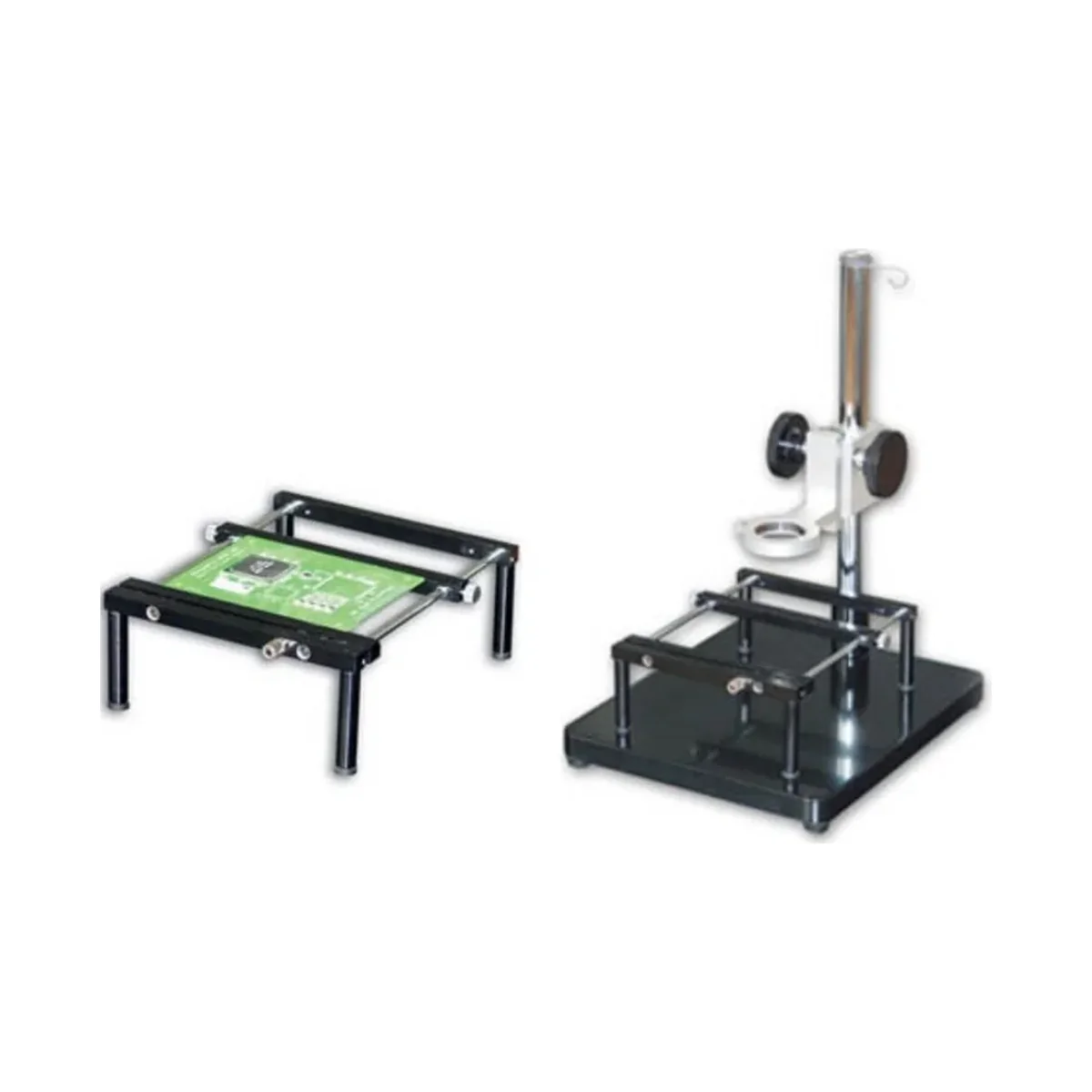
PCB fixture
800 L
BGA Re-Work System Fixture (Large)
Holds boards up to 305 mm, mounts an 850-series station above and the pre-heater below.
₹20,000
₹30,000 33% off
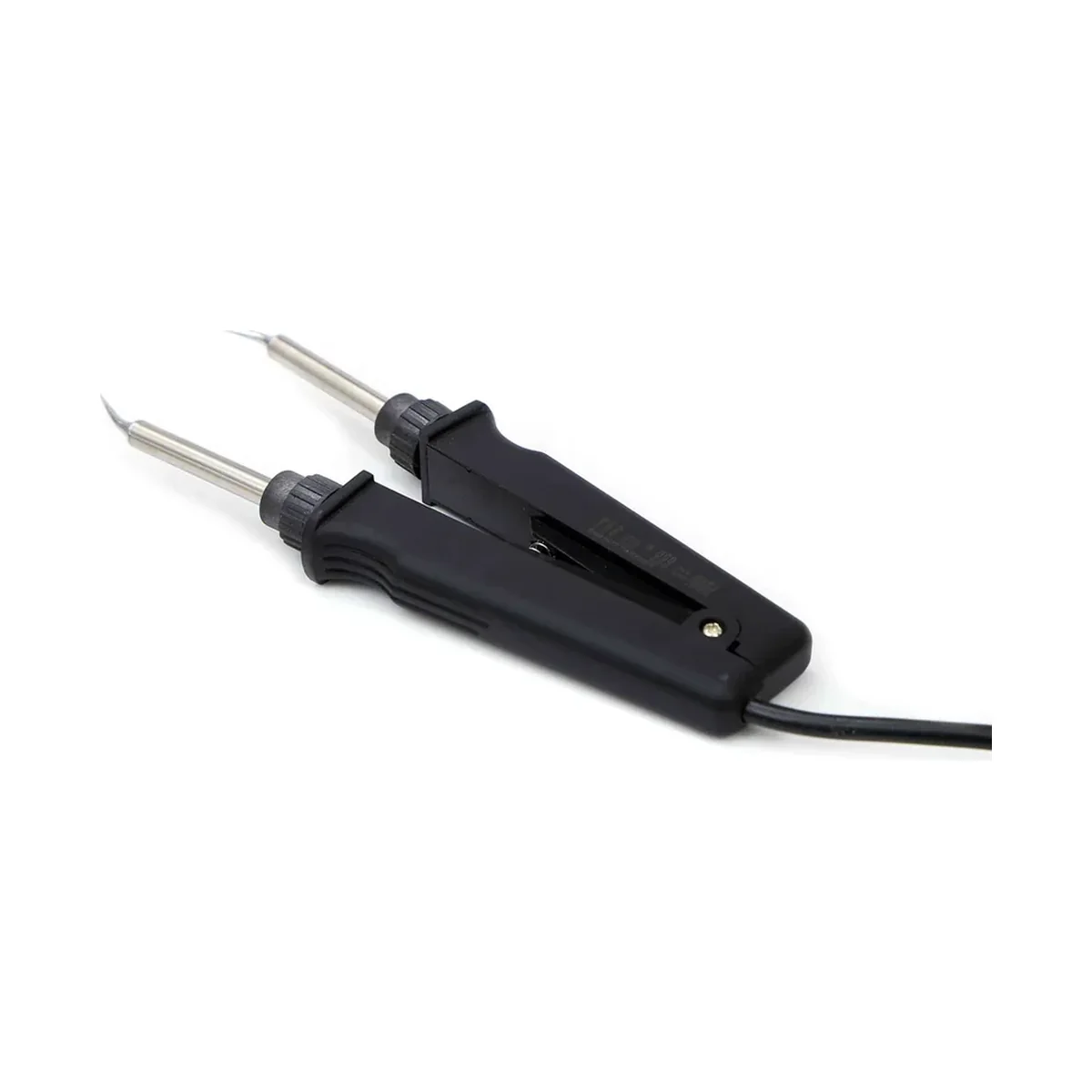
Hot tweezer for the 937
989
SMD Hot Tweezer for Soldering Station 937
Two 25 W ceramic heaters lift and fit small SMD parts such as resistors and capacitors. Fits the 937 station.
₹9,000
₹14,000 36% off
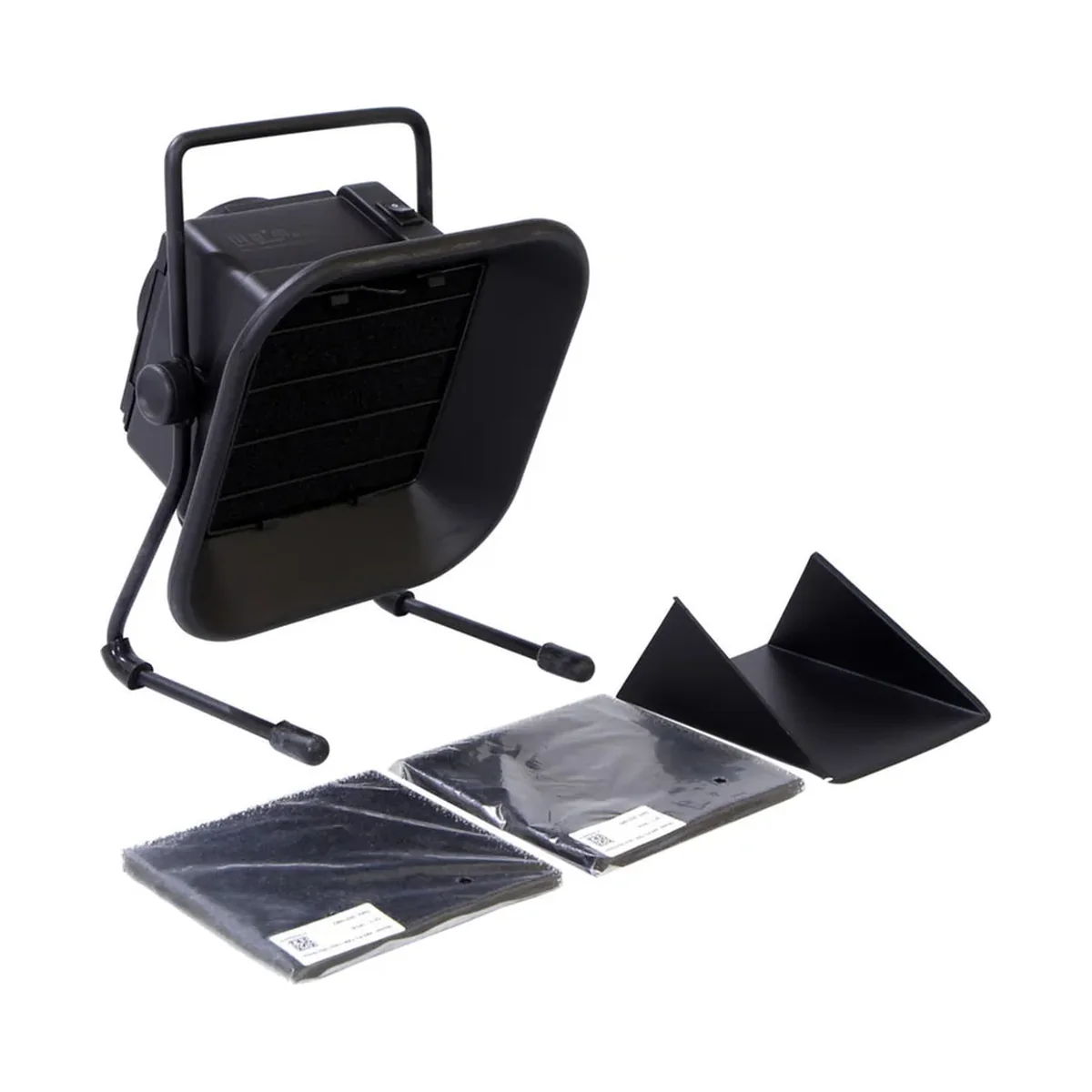
Fume extractor
493 ESD
Smoke Absorber / Solder Fume Extractor
Moves about 1 m³ of air a minute through a replaceable activated-carbon filter, so you are not breathing flux fumes. Three filters supplied.
₹4,995
₹7,500 33% off
Using hot air safely and well
- Choose a nozzle slightly larger than the part, so the air heats the pins and not only the body.
- Start with low airflow. Raise it only if the heat is not reaching the joints.
- Pre-heat large boards to avoid warping and thermal shock.
- Let the station cool automatically before switching it off, as the auto-cooling stations do.
- Keep a fume extractor running whenever you work.
Do I need a hot-air station or a soldering station?
Both do different jobs. A soldering station handles through-hole parts and larger SMD parts. Hot air is needed for ICs with many pins and for removing parts without damaging the board.
What is the difference between the 700 ESD and 706?
Both pair hot air with a 50 W iron. The 706 has 580 W of hot air and an LED display; the 700 ESD has 270 W and no digital display.
Are nozzles included?
Three nozzles come with the 850 A, 850 D, 700 ESD and 706, and the 700 ESD and 706 also include a pointed iron tip.
Which station is best for lead-free rework?
The 861 DW is designed for lead-free work, with up to 1000 W of heating power and 500 °C.